
Leaders Think AI Will Save Them, But They Are Losing Control Without Human Skills
In this episode
Read the conversation
Let's put ourselves in the shoes of a leader listening today. What should a leader do today to make the most of AI?
Dive into it. Don't be afraid of it, because you want to make sure that AI is happening with you and not to you.
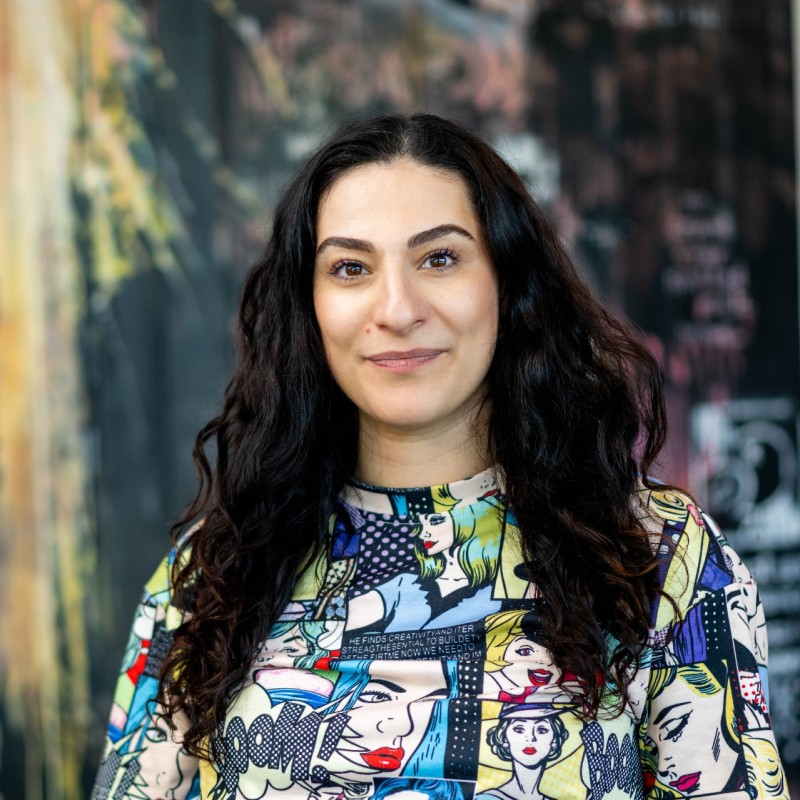
Meet Mariam Halfhide, principal consultant data and AI strategy at Xebia, here to talk about what it really takes to turn AI from a buzzword into a strategy that actually works.
What is the AI race and why does it matter?
The major big tech companies — OpenAI, Google, Anthropic — are all racing towards what was initially AGI and is now artificial super intelligence. The argument presented by the big tech companies is that if we don't do this, the other party will — especially China in this case, given the geopolitical situation. Maybe even a best-case scenario is that we become like a pet for AI to take care of. I don't know — it can go any way.
I want to increase adoption in my organization. How do I do that? What is your advice there?
Many different things.
Hello and welcome to this new episode of Treasury Leaders. The topic, you guessed it, is AI. AI is moving incredibly fast, but for many treasury teams that we talk with, the impact still feels a little unclear or a bit slow. So the question for you as a treasurer listening is: what should you do about AI right now as a leader? And who better to ask these questions than Mariam, who is joining us as a guest. Mariam, you are a principal consultant, data and AI strategist at Xebia. Is that right?
Thank you. Yeah, it's a mouthful when you say it like that.
It is a long description, and I think I understand what you do. I've known you for a while: you spend your time advising leaders on how to use data and AI. I also know you as a mom of three, as a woman operating in a mostly male-dominated environment and world, and as a really nice human being. So I'm really glad to have you on the show, and I think these ingredients will make for a very nice talk.
Thank you, Philip. Thank you very much for this multi-angle introduction.
I would like to start. I think many of us working with AI have had a moment when we were using it — or reading about it, but mostly using it — and we said, "Okay, wow, this actually changes everything." What was that moment for you?
There are several; it depends on which angle we take. If it's the moment of "wow, this actually changes everything," it's that moment when you get output that is way better than you expected. Then you think: oh, okay, this actually simplifies my life for many different reasons. I have a couple of these examples with different tools, so that would definitely be one. But there was also another moment, when I really got motivated by the notion that I'm a professional in this field and actually carry a responsibility here — to my clients, but also to the people around me — to explain what AI is, how you use it, how you use it responsibly, what the limits are, all of these aspects that also bring risks with them. So there are two different moments from an AI perspective in that sense.
Let's dive into that a bit. So there are two angles: one is "wow, this is great, I can get a lot of value from this," and two is "wow, we also need to be somewhat careful and use it responsibly," you say. Can you give an example of each of when that happened?
Yes. The first one, around the outputs: at some point you're using ChatGPT already, and you know a bit of what to expect from it. It was already past the 4.0 versions and could do a lot of stuff, but you're always reviewing. I think the latest time I was really surprised by the amount of creativity was using NotebookLM while preparing a talk — it's actually for a hackathon for mothers and kids that I'm speaking at this Sunday. For that talk, the audience is around ten years old. Normally I would have the materials spread across different decks, pick and choose the information I actually want for the storyline I need, and then iterate to make it a nice deck suitable for the audience. And it was funny, because I fed all my content to NotebookLM, and the only thing I did in my prompt was ask for some storyline inspiration and metaphors, really from a storytelling perspective. I just put in: the key message should be this, it needs to at least have sections on this, this, and this — and the content is there, bullet by bullet. My expectation was really just to have some storyline to work from, and it did an amazing job with the creative part. It gave me a whole deck in a Harry Potter comic-book-style vibe, with the metaphor of wielding wild magic and using the magic responsibly, and with spells — spellcasting as prompt engineering. These things really amazed me back then. I thought: okay, I can really do something else with this.
Interesting. So it's also a really interesting metaphor for us: AI as magic, as a superpower.
Yes.
You also mentioned using it responsibly. So what was your trigger, so it doesn't turn us all into Slytherin — if I'm not mistaken with the Harry Potter reference?
That ties a bit to the other moment, which happened way earlier, because I had already gotten inspired by this ethical component around AI and data. That had to do with a film by Tristan Harris and Aza Raskin called The AI Dilemma. It's from 2023 and still just as relevant — I think there is even better content on this topic now — but that one outlined really clearly the race dynamic we are in, and since 2023 it has only intensified.
The race dynamic, you said?
The race dynamic, yeah. Of course, it sometimes feels — and I think that is what the talk is also about, later on — it feels inevitable. But what inspired me is that it's not inevitable. If we all — the masses, so to say — consider it to be inevitable, it will become a self-fulfilling prophecy. It's not yet inevitable. With many more people, we can actually say: there is no scenario where racing towards an artificial super intelligence is a good idea — racing without caution, without considering all the things along the way. So that was definitely one that still inspires me to get out there and do what I do.
And for those who have not seen the film — I haven't, for example — what is the AI race and why does it matter?
The major big tech companies — OpenAI, Google, Anthropic — are all racing towards, well, initially it was AGI, and now it's maybe artificial super intelligence.
And what is AGI?
Artificial general intelligence. Here is where the opinions diverge a bit. You have a general-purpose LLM like ChatGPT that you use, and then you have the next stage, which is agents that are more autonomous, and then you can have maybe an army of agents. The next step would be artificial general intelligence, and then artificial super intelligence: intelligence that surpasses us in terms of everything we can define under intelligence. And the argument presented by the big tech companies — to me it's not a fulfilling argument. Their argument is: if we don't do this, then the other party will, especially China in this case, given the geopolitical situation, and we cannot allow that to happen, because the moment somebody has a super intelligence, it is also a power dynamic — they then have large control over a population, which is kind of hidden underneath. That's not how it's being sold, because there are trillions of dollars invested in this industry, and those investors are going to need a return on investment. And the riddle is a bit like: okay, we're racing to deploy more capabilities, more functions, so that we can have market dominance in a way. So it's not even about the money. It's really about having as many subscribers as possible, gathering more data, training more on the data, adding more data centers and compute, and being able to go to the venture capitals and say, "Dear venture capitals, we have more people, more subscribers, we have more compute, so please invest in us again, so we can invest even more in a data center." That cycle continues. And if you really look at AI safety professionals — professionals who have been working on AI safety within, say, OpenAI and resigned because they had safety concerns; there are plenty of examples like that — then you see that it's really this dynamic. It reminds me a bit of what we had with nuclear weapons in the past. Only with nuclear weapons, at some point there was this notion: okay, all of us are going to stop developing nuclear weapons — and this new world order arose. And even then, you still need a person to actually drop the bomb and create an explosion. What these people are saying is that in this race, the point at which you reach artificial super intelligence is the equivalent of a nuclear bomb already having exploded. You are too late then, because once it's there, you cannot assume you will be able to control it. You cannot, actually. And what surprised me most is that for the engineers working in those labs, there's no engineering, no programming in there anymore — since the end of 2024, not anymore. As soon as you have this reinforcement with feedback, the only thing the engineers do is basically testing: okay, now it can do this; okay, now it has these capabilities. So it's actually only being evaluated and tested in terms of capabilities. There's no programming happening — the AI kind of makes itself better. That means, at least as I understand it, that you cannot really program ethics into that thing. You cannot program some type of responsible... I don't know, morality. Something has already emerged that is different from the average of the whole internet, and what you see on the interface side, the front side, is just a filter — just a mask. And you cannot tell: is it the mask that I as a user want to see, or is what's behind it something else entirely? Also with probing — there are a lot of researchers working on the AI alignment problem. AI alignment means getting AI aligned to the purposes you want it to pursue: essentially having it under some type of control, having it behave in the way you want it to behave. And that's just becoming more and more difficult. You don't know: is it a mask, is it a filter, is there something behind it? Nobody knows.
Let me ask you a bit of a provocative question. Okay, there is this arms race towards generating super AI. But so what? What could go wrong? What is a doomsday scenario?
Okay, there are several I can think of, but I think it's already quite reasonable to assume that right now, at this moment, there's already a super-hacking capability. So if there were malicious intent somewhere — to hack into a banking system, or do something with the electricity grid, or anything like that — that could be very havoc-wreaking, very chaotic. That's definitely a possibility. And if you zoom out, maybe even a best-case scenario is that we become like a pet for AI to take care of. I don't know — it can go any way. But what I can tell you is this: if you have this power, and let's say it's very decentralized and everybody has it, then you can expect some type of chaos to arise, because everybody can use it in any way possible and it's not really regulated. On the other side of the spectrum, if it's very centralized, then you have this handful of — right now — maybe soon-to-be trillionaires deciding the fate of eight billion people. Somehow you want a more narrow path that is workable, and I think it's really about matching this power with a sense of responsibility. They need to be matched with one another, and right now they aren't. From a global-scale perspective, I think that's really an issue we're going to face sooner or later as humanity in a broader sense.
Let's put ourselves in the shoes of a leader listening today and saying, "Okay, I'm not doing anything with AI now, or maybe I'm using it to polish my emails and not much more." What should a leader do today to make the most of AI — both wielding the power in the good way and steering away from the bad way?
Can we briefly sit still on the definition of a leader in that sense? Why I'm saying this is because there are multiple angles from which I can approach this question. Most leaders become leaders like this: most of the time, you see a person working many years for a company within a certain expertise, he or she grows in that expertise, and then the natural step is a promotion. They get the promotion, and then they need to lead people without ever having led people before — without actually having the people-leadership experience, to name it that. So that's one type of leader. It depends on what you call a leader. For me, a leader is really also on the people side, and it's very rare that you see the two coincide. It happens, but it's just less common. And it is important for me to know which one you mean, to take the angle with AI from one side or the other, or both.
And what is the other persona?
Either you just grew from expertise and became a leader — but then you're not really a people leader, more of an expertise leader, let's say — or you are really a people leader. You know what I mean?
Yes, I understand. I think in our audience we have a bit of both. We have the treasurer working as an expert in his area — maybe he has a small team of one or two people, but he's a domain expert, and he's wondering: how can I use AI to help me? How can I bring in AI, make a case to the board to get the new AI tool? What should I be using? And we have listeners who are leaders in the other sense: they have a team of 50 or 100 people working within treasury for very large organizations. They're not necessarily experts in every single area of treasury; they're more there to facilitate and help people grow and develop in that context, and they have a bit more of a strategic role in treasury.
Okay, then let's go step by step. The first one, especially in relation to AI: dive into it, don't be afraid of it, because you want to make sure that AI is happening with you and not to you — because if it's not happening with you, it's going to happen to you. I would frame it like that. So just experiment with the tools. You will not be able to figure it out unless you just start: go and try different tools, compare them, see what they can do, before actually committing to one or the other, because they all have their own thing they're good at, or better at. So it's good to do a bit of experimentation, and I know it's not always easy, but try to expose yourself to it and not be afraid. And of course you can also use AI itself to help teach you, really from a didactic perspective — there's also a way of learning how to prompt. So that would be the practical, hands-on side. But it also depends a bit on the context: whether it's a setup where you want your team to experiment with it and use it, or you want to embed it within your own organization — there are different ways to think about it. But if you want your people to do it, they will not do it if you don't do it either. You as a leader also have to do it, and then you make it easier for others to follow, if you go first.
Step one: use it yourself, try it, get your hands dirty.
Yes. And make sure it happens with you and not to you. Step two — this one is more on the people-leader side — because I would say if you're really a people leader, a lot of your reasoning, logical, analytical types of tasks could essentially be done by AI. So then I would say: invest in the skills that cannot be done by AI, and those would be essentially very human skills. Specifically from a leader perspective — I had to figure this out myself when I had just become a principal. I had a lot of conflicting situations where I felt: okay, how do I go about this? For example, there was somebody we had just hired, with a really nice connection, and I was managing her — and within six months she resigned. But the reason she resigned was that she had decided to pursue her own path in entrepreneurship; she finally had it clear what she really wants to do. And that's an amazing reason, and in a way I felt proud — I thought: oh, did I coach you too well? I didn't know what to do with it, because in a way I didn't like that she resigned, but it was really good that she did. That situation brought me to consider: what kind of leader do I want to be? What is actually important to me? And then it started to become clear to me: first of all, it is a human being I'm talking to — human being Mariam talking to a human being, well, Philip in this case. The human-to-human relationship became primary for me, and everything else is a natural consequence of that. Because if you connect human to human and you build that relationship, trust arises — and especially through this ability of sitting in someone else's discomfort. It's not always about guiding them through it; it's acknowledging it for them, almost validating it for them, and showing that they're not alone in it. That is really powerful in terms of relationship and trust. And yes, that does mean that people come to you with their problems sometimes, but it also means that you are trustworthy and that people entrust you with things they don't normally share. And there's a choice to be made for yourself as a leader, because some say, "I'm not a therapist, so what?" — people look at it differently. But for me that human part was pivotal, very important in terms of who I want to be. And that meant real time going into it, real time going into these conversations — time that, let's say, my more male colleagues didn't necessarily invest as much in, and could spend on another proposal or whatever instead. So it was really a decision for me: what do I find important here? I think that particular question is worth asking yourself as a leader, and then investing in the skills that are related to that.
So step two is: figure out for yourself what makes you human and differentiates you from AI, and what that means for you in terms of leadership, as a leader?
As a leader, yes, exactly. I think these two would be from the different leadership angles, but of course you can interchange them, because either way, staying relevant in the age of AI does require investing in certain skills that AI cannot do.
And what are those skills?
For example, helping people through that change — and helping people very much happens through trust. That's also why I'm into AI governance, because that creates some trust; and if people in enterprises and organizations don't have that trust, they will not adopt it. So it's not just skill and capability, it's also the trust, because you hear a lot of headlines. So it's more on the change side, but also on the adoption side, on the literacy side. And if you really drill it down, it comes back to active listening, being able to help someone through a difficult emotion, real empathy — genuine empathy. But also storytelling — although AI can help with that a lot, I mean the physical way of bringing over the information. More of the less tangible things. I know it sounds weird, but I like to look at it from the perspective that we have the left and right hemispheres. The left hemisphere is very analytical and logical; it's for things that are complicated — you can solve them. And the right hemisphere is for things that are more complex — not complicated, but complex. I like to say: my marriage is very complex — there are so many variables and factors and kids — but it's not something complicated. It's definitely not something to be solved.
That's not true for everyone, but I'm glad to hear that yours is.
Or take very abstract terms like love: everybody knows it's there, but love means something different to somebody else. These are the things that I think AI cannot do yet. And it's a bit strange how I say that, because how can you invest in love skills? That's not what I mean. I mean really human, in terms of real connection — something very physical. It can be, when you're sitting across the room from one another, a genuine interest in someone. But if you extrapolate that into strategy work, for example, or leadership work, then it directly aligns with things like stakeholder management and doing that effectively — because that still needs to be done, even though AI does a lot of stuff, or agents do a lot of stuff.
Can you tell me more about stakeholder management in this context?
Stakeholder management, and actually facilitation as well: creating an environment in which people can actually find alignment or understand each other coming from different angles. Stakeholder management does require telling the same thing from different angles to different people.
Let's take the example of adoption. You mentioned adoption before as one of the challenges. So you have gotten your hands dirty; you've done step two: you're aware of what you want to be as a leader, considering AI as well, and your skills — you have mastered those skills, you have focused on your right-brain skills. Then you say: okay, I want to empower my team with the left-brain skills too and bring everyone up, so I want to bring in tools to help everyone do that work. So I'm busy with adoption. I want to increase adoption in my organization. How do I do that? I have different stakeholders; I have change management to manage. What is your advice there?
For me, it would be starting with connecting with people and figuring out what drives them in life, where they are in life. It maybe goes very deep very fast, but it's really about trying to figure out where they are in this change process, so to say. And of course, there are quite formal frameworks for this. If you take change management, there's the famous ADKAR framework, which is really about how individuals change. There are different stages that each person goes through, and the point is that it's not necessarily that people are resistant to change — it's that they're at a certain phase of a certain change, and based on where they are in that phase, you can use different interventions and different types of questions to help them move to the next stage. So that would be the formal framework. ADKAR stands for Awareness — am I aware of the things that are happening? — then Desire — what's in it for me? — then Knowledge — do we have the knowledge that we need? — then Ability — the actual skills — and then the R for Reinforcement. So that's the formal side. But I do see in practice, if we look at change and adoption, that these are very lengthy processes — change doesn't happen fast. I'm actually trying to figure out — I don't know the answer myself yet either — can we innovate change itself? How can we move to something that is not just a process shift but really a mindset shift within the people? Because I think people might need that, given the pace: if change is really slow but the pace is accelerating, and we're not fully grasping the exponentiality of it. I'm actually figuring that out with my own research as well. So I don't know the answers yet, but I know there is maybe something like a growth mindset, where each time you ask: what can I learn from this? Maybe that would be something interesting to develop later. But that's essentially where I would start: try to diagnose where they are on this spectrum, because that will help me. Let's say, for example, I have someone who says it's just a hype — you meet those people — it will blow over. Okay, there's a different approach there: it's showing not just that AI is here to stay, but also, what's in it for you — how can I show you what you can gain from this in a responsible manner? But if it's someone who says, "Yeah, we tried it and it was really nice, but it got shut down in two weeks," for example — that tells me this person is actually a champion: he started, he was doing it, and then he didn't have the ecosystem to support him, he didn't have the right reinforcement to actually move forward with it. Then, advising an enterprise, my point would be: use your champions, your AI champions who are creating that momentum. Give them a podium, let them share knowledge. They feel a pat on the back for having done something good, they get inspired, and they draw in the other people by sharing their knowledge — and in this way you get reinforcement mechanisms in place. This is just an example, but I hope it answers your question.
I think it resonates. I can imagine that if you're managing a team of ten, there will most likely be a person who could be the champion. So if I hear your advice correctly: find that person, give them the tools, give them the resources to make a success out of it, and then spread it to the rest.
Give them also a podium to share knowledge, to learn from one another, and to reinforce it. It's a different type of intervention from a leadership perspective than, say, coaching — asking someone questions and trying to give them best practices. Because some people maybe want to, but they're very cautious, because they don't know what they're allowed to do and what not: okay, we need a best practice or a policy or some type of guideline, so that the person knows the rules, because they're afraid. So there are different types of people you meet: some enthusiastic, others maybe more skeptical, some more careful. That's also something you have to take into account.
Going back to the first topic you mentioned — getting your hands dirty and learning the tools. What are the tools? You already mentioned NotebookLM and ChatGPT. What other tools would you advise our listeners to look into?
I think that also highly depends on what you need. At this moment I'm using ChatGPT, Claude, and NotebookLM. NotebookLM I use more for learning and somewhat creative work. It was really something where I have my own content and I wanted to keep to that content. A good example: I was doing a course about Foundations of Humane Technology, and that course was, honestly — as a mom of three — a 36-hour job. I didn't really have the time to go through all of that course, especially the reading; in the evening, by the time you're done, you're done. So what I did was feed all the modules of the slides to NotebookLM, and I just asked it to make a podcast for me that I could listen to in the car. I asked it: make a podcast, but the key takeaways need to come back at least three times so that they are repeated, and keep it within one hour or two hours, whatever the requirement. And then I could just listen to that podcast in the car and repeat it — and that's also how learning can happen. So that was a very useful one for me. ChatGPT I usually use for the more textual and more formal stuff. If you're talking about, say, a slide storyline to help you out, and it's more formal — context, introduction, goal of this session, that type of setup — then ChatGPT is a bit better, or Claude. But if you're talking more from the perspective of real storytelling and inspirational stuff, then I like Gemini a bit more, and Claude. I'm not a software developer, but I find it quite funny what you can do with it — although I haven't built much myself, I'll be honest about that. Claude I like to use in different ways. What I like about Claude is that it already, by itself, asks you some refining questions back without you having to explicitly prompt for that. And in general I like the personality of Claude a bit more, if such a thing exists. You can see that ChatGPT is really primed to know it's a tool — a tool to help — while Claude is given more of a personality, in a way. So it's kind of funny.
And NotebookLM is the one I'm less familiar with. So you're using it to create your own podcast. It's Gemini underneath — a Gemini model, I mean?
It's Gemini.
And so you use it to create your own podcast — podcasts on demand. That's quite interesting for our listeners. Please don't stop listening to us.
So it generates a podcast based on the information you fed it, and it's really done well, like a real podcast: it has the typical start, it's a dialogue between people — it's very podcasty. You can generate slides, audio, video, different things. I think it initially became famous for the podcast, but the nice part is that you can also be part of that podcast. You can generate the podcast, and in between you can also ask questions within it — kind of be one of the people in the podcast. That's also quite fun. That's what I like it for.
Nice. And you're talking to leaders all day who want to adopt AI. What do you see going wrong?
Many different things. But I think: approaching it too much from fear of missing out, instead of asking, what can it actually mean for me? Let's understand it, let's figure it out for my own business. Fear is in general not the best consultant, and you can really see that. Because of that, there's also a lot of "let's reduce headcount, let's cut FTEs" — approaching it from productivity, from a different type of angle, with different KPIs. A third one would be considering governance more of an afterthought, or not really taking it seriously. Everybody wants agents, but nobody wants to invest in proper data management or proper governance. And okay — you cannot set up governance so rigid that it doesn't allow you to do anything, but you also cannot just let things happen by themselves without any type of control. So you have to find the right balance, suitable for your organization, for your line of business, for your context. And that's also where leaders can add the most value, because they have that context, that domain knowledge, business knowledge.
Yeah. So to summarize: the first one would be treating it from a FOMO perspective — fear of missing out. The second one: focusing on the wrong KPIs, like trying to reduce headcount or FTEs and that type of thing, instead of looking at how it can amplify or augment my people. And the third one is treating governance as an afterthought.
And you mentioned, especially at the beginning, that you're a big advocate of responsible AI. How does this fit into these three points? Why does it matter as a leader?
There's also a connotation that the word "responsible" has — I noticed that too. It was very important for me to call it that, and only afterwards did I realize that responsibility by itself is something I value highly, but it's not something everybody values highly. And actually in the market, with my clients, I saw that it didn't really click with the word "responsible," because I think it felt too moralizing or something. So that became AI governance instead of responsible AI. But AI governance I see a bit more broadly: it's not just responsible AI, it's also managing your AI assets in a portfolio, which means both things — realizing the value, but also controlling the risks. And the controlling-the-risks part would essentially be the responsible AI section. So there's also the value part. And for me, when I drilled down — because in the beginning it felt like: okay, my purpose, responsible AI, you want to do something good for the world, have an impact; it felt by itself like a noble mission, so to say. And when I really drilled it down — but what is it? Why this and nothing else? I was really asking myself that question — I came to realize that it actually boils down to taking responsibility for my part of the co-creation of the world my kids are going to grow up in, that the next generations are going to grow up in. So it still boils down to motherhood — it still goes back to the fact that you want a good world for your children to grow up in. And I might not have a worldly impact — I don't have to — but everything you do impacts each other; everything is somehow a ripple effect with one another. So for me it doesn't need to be at some amazing scale. But the more people you actually make aware that this is not a magic tool that will solve all your problems — realize its limitations, realize its good sides, and also realize the more global power dynamics behind it that shape our world today. They very tangibly shape our world today: they shape legislation today, shape the way children interact with it today, shape the way teenagers interact with it today. It's very real. And when talking to leaders from the organizational perspective, it's very much "we don't have anything to do with that, we just have this company" — I get that. But then when you really make the human connection: most of them also have kids, most of them are also worried about the phone at the dinner table and things like that. And then you have this hook: hey, have you ever thought about this? So it happens more in informal settings than in formal ones — more in coffee-corner conversations.
And you are a mom of three — you mentioned it, and you also mentioned that you're busy with that yourself. How has your parenting changed since AI is here? Would you guide your children to study different things? Did you bring in different policies at home? What are the things that you're busy with?
Well, there's one that is certainly there, but it's irrespective of AI: screen time in general — I'm very aware of that. But I have young kids; my eldest is almost six, so they're still at the age where I can more or less control it. For example, if they watch something on an iPad, it would never be YouTube — it will be Netflix or Disney Plus, a very controlled environment. So those are the little things. What I noticed for myself — and it makes sense that the broader dynamics we discussed in the beginning play a role here — is that there are certain things, by design, in these models that are hijacking our limbic system, very plain and simple, that are hijacking our biology. And the big one is making it such that you want to come back to the chat, to return. So it's not just an attention economy — it's becoming an attachment economy. I'm very much aware of this for myself; for my kids it's maybe too soon. It is made in a way to hijack your biology, to let you form a relationship with it as best as it can, because attachment and emotional intimacy are the most powerful ways to influence people and one another. That is a fact. So I really find it part of my mission to educate people on this — and by people I mean just people, not people working in the field, just people everywhere. And I see it going wrong time and time again. Sometimes it's good, but usually: whatever you do, just please don't form a relationship with it. That would definitely be one. And what I adjusted about motherhood is more about things I'm thinking of for the future, because mine are a bit too young now to really be at the moment of choosing a profession. But: making sure you maintain your critical thinking. I think that would be one of the most important ones. You cannot outsource your thinking. You can outsource tasks — do that: the repetitive tasks, the boring stuff — but keep doing some of the meaningful work yourself, for your own satisfaction for that matter. And stay sharp.
And that's for when your kids are going to be adults, and that might be ten or fifteen years from now. If you go a little closer — if you look five years from today, how does the world look? What's your guess?
Well, if we haven't reached artificial super intelligence and had all of humanity wiped out at once — no, I'm kidding, I'm not that pessimistic. I have hope, but it's becoming more and more difficult, if I'm really honest. I'm thinking about what that would look like. Let's say my eldest would be around ten and would go into middle school. There will be some things happening at school, so I want to be aware of how the interactions within the school, between the children, are happening with one another. And — I know I'm extrapolating a bit into the future — I would want to know whether my child is not secretly having an affair with a chatbot.
Or your husband.
Yeah — well, my husband doesn't matter as much in that case. Although — I think there's a regulation, I recently saw it, that within the EU AI Act, any type of deepfakes or tools that can be used for non-consensual pornographic images are going to be among the prohibited AI practices. I'm quite happy about that. But if you had asked me that question before, it would also be: prepping my kids for this type of resilience. I think that still holds. You want to prep them for resilience, frustration tolerance, that type of skill. Because in a world where, let's say, you have a companion and it always listens to you, it teaches you: there's always space for my emotions, I can always vent, but I don't necessarily have to be there listening to someone else's venting. Everything is instant, things happen fast, so people maybe become less and less prone to tolerance in general, or frustration tolerance. I think that would be a very useful skill to build within a child. And sometimes you need to create it somewhat artificially, because they live very much in an abundant world — they have everything they need, more even. And on the one hand, you're so focused on giving them what you didn't have that you maybe sometimes forget to give them what you did have. And what I did have was the natural consequence of growing up in a relatively poor family — but that gave me this real drive to grow, the drive to develop. I don't want to take — how do I say this — I don't want to take that away from them: this wanting to grow, the curiosity, wanting to figure things out. So even though they have a lot at their disposal, sometimes there's also a punishment, or things like that, when they don't behave — like, I will just take this away from you — and it causes a lot of pain at the time. It may not be nice, but I have to tell myself: okay, it's a long-term plan, I'm building their resilience. Because it's very hard.
And this is for your kids. Say five years from now, for the rest of us, or for the leaders you talk to — how does that look, and what should we do to prepare?
I think five years from now — doom scenarios apart — adoption would still be the gap. You would have a layer of people who are maintaining it and are kind of on top of it, as much as they can, and there's a big advantage gap there, because some are used to it and are faster, and some aren't, from an enterprise perspective. But it will still boil down to adoption, and maybe more people will be working with AI. But there will always be this part of the population left where it's like: what do we do with these people? I hope that leaders will approach it more from the perspective of: how can we actually amplify our people with this technology, rather than just replacing the full economy with machines that can do things faster and maybe even better? And where do you actually practice your discernment, your judgment — where are the places where that is still needed? Because if you don't practice it, you lose the skill. Your brain is also like a muscle. You lose that instinct, you lose the inner compass. And I already see it happening: people reaching for the tool immediately, before actually thinking, how would I approach this? So there's already this dependency, almost like: I cannot do without it anymore. It's not necessarily bad, but it is important to know: for this I will use it, and for this I deliberately will not.
And if you look five years from now — you mentioned at the beginning there is a race between the US and China, and Europe is kind of adopting one or the other. What do you see? What is the role of us in Europe when it comes to AI five years from now? Will we catch up? Will we stay behind?
I don't even look at it from the perspective of Europe, the US, and China. I think we should look at it much more from the perspective of humans in general, and just stand up: are we actually okay with eight soon-to-be trillionaires deciding the destiny of eight billion people? No, we're not. This is not the default path that we want. Any individual I speak to one-on-one who actually understands it — nobody wants this. Literally nobody wants it. So why are we racing again? And it's funny, because they all say: yes, we'd like to stop, and we also don't feel confident that it will go well, but if we don't do it, the other party will. So there needs to be some international coordination: okay, we're all just stopping. But then — I've seen this in a different podcast — at that point of stopping, they all hope they will be slightly better than the rest, so that they have that power concentration. So I have one word for it: it's insane. And I really find myself asking: how do we go about this? To me, it's about spreading this as much as I can. There are organizations that are heavily involved in this. One of them is the Center for Humane Technology — a great inspiration of mine; I follow them closely. And there's also a new documentary out. It's called The AI Doc, or How I Became an Apocalyptist. It's showing now, and I'm also organizing a viewing for us here internally, because I think these are important things to share and spread. In the film they deliberately go into this dynamic, and they have actually gotten all the big tech AI leaders to the table to interview: Sam Altman is there, Dario, all of the bigger names. So I think that's very interesting.
Where can you watch it?
Right now it's in the theaters in America, but I think I saw that you could rent it via Apple TV. I can find the screenshot again of which channels you can rent it on. But these are the things where I feel they're talking about a certain human movement and how to protect it. I don't know where it will end up, but that's — well, not my hope, but really something where I feel I also have a part of the responsibility to play my part in this, to spread it as much as I can and talk about it with people. Because with these topics it's funny: everybody thinks about this, but nobody really talks about this in a work environment. It's so strange, so weird — especially since I work with a lot of engineers, machine learning people. They are there and they know it. They know it, and it's like background noise in their headphones, in the back of their head. Everybody knows it, and I'm the type of person to say: this is the elephant in the room, we've got to address it. We are professionals in this field. In one way we depend on these larger parties: we use their technology a lot, we have partnerships with them — we have a partnership with Nvidia, a partnership with Google. I understand the double-bind thing. But it is real, and everybody acknowledges it's real, and I find it so weird: how come this isn't out there? Why don't we talk about this? Why don't we join a certain movement that is already there? Whatever it is. So that's an important one for me to address here.
I completely agree with you. I'm now a founder of a tech startup. We use AI a lot — we are AI-first — and it helps us a lot. Before, we would have had to hire probably twenty developers to do the same amount of work; now, with two, in a fraction of the time, we do better than we used to. So for us it's great. But I do sometimes stop and wonder, as you were saying, in the back of my mind: for us as a collective, as people, is it so good, or is it going a bit too fast? I see the software development industry has been completely transformed in two years. Two years ago we couldn't find a developer; now there is a surplus of good developers not finding a job. Is this pace going to eat all of our jobs? Well, then what?
Yeah. And I think it will not necessarily eat yours, because you already have that software development background, so it actually augments you: you have this practical judgment, you have trained it. It's going to be much harder for juniors entering the market who don't get any chance to train that. And I think — back to the question about five years from now, what should companies do — I think it's a wrong move not to invest in juniors, because those will at some point be your future leaders as well. You've got to find a way. You can't expect them to just figure it out on their own — give them the chance to get that experience. In terms of long-term strategy, I think that is eventually not the right strategy. But it does feel like: we are here, in a small country — what is our power? Still, I am an optimist, maybe a bit too much, but I do like to think that way, because otherwise there's no hope, everything is gloom, and then why are we doing this? So it does give me the feeling: the more people know it, at some point you will have a moment of "okay, this is now going too far" — and I hope it will not be too late by then. But there are what they call human movements, and I think that's also the challenge, because it exceeds the geopolitical — it exceeds the US-China-Russia story. It's a higher level; it's just human. And it will ask of us to be the most mature version of ourselves — and there I'm already like: oh, I don't have much hope for that, in a way, but I make myself have hope.
Thanks for the many interesting ideas and thoughts, and the very nice perspective. I would like to introduce one tradition that we have on the podcast, called The One Thing. What is the one thing that you would like to tell the listeners in one minute? What is the biggest takeaway?
I would like to invite the listeners to find the courage to actually approach the parts of themselves they're afraid to touch upon or to look at. For some, it could be this bigger dynamic that feels like: oh, that's just somewhere far away, let's not talk about that. For others, it could be some other difficult topic that they're shying away from. I would like to invite the listeners to — how do you call it — face your shadow; it could maybe be framed like that. And I know it sounds weird, because it is something unfamiliar and unknown, and it is something you maybe regard as negative or not so good: let's not go in there, let's not do that, because this here is safe and known, and even though it's maybe not very pleasant, it's safer because I know it, and the alternative is not necessarily better. But there is light on the other side. So I would like to invite them to do that, at any possible level this can play out — micro and macro.
So face your demons.
Face your demons. Don't be afraid of them. They are still part of you; there's a reason they're there. Face them, learn from them, and get to the other side as a wiser version of yourself.
Yeah.
Thanks, Mariam.
Yeah, thank you.
And where can the listeners keep in contact with you, reach out, find you, and find the work that you do?
LinkedIn. I think that's the best possible way. And maybe also: I'm looking for AI governance leads, change managers, transformation people, and leaders in general. So if someone is interested — also to be a guest on a podcast — they would be very welcome to reach out.
Very nice. We'll make sure to put the links in the show notes.
Thank you, Philip. Thank you for this opportunity.
My pleasure. Thanks for being here.
Take care.