
How Treasury Earns a Place in the Business
In this episode
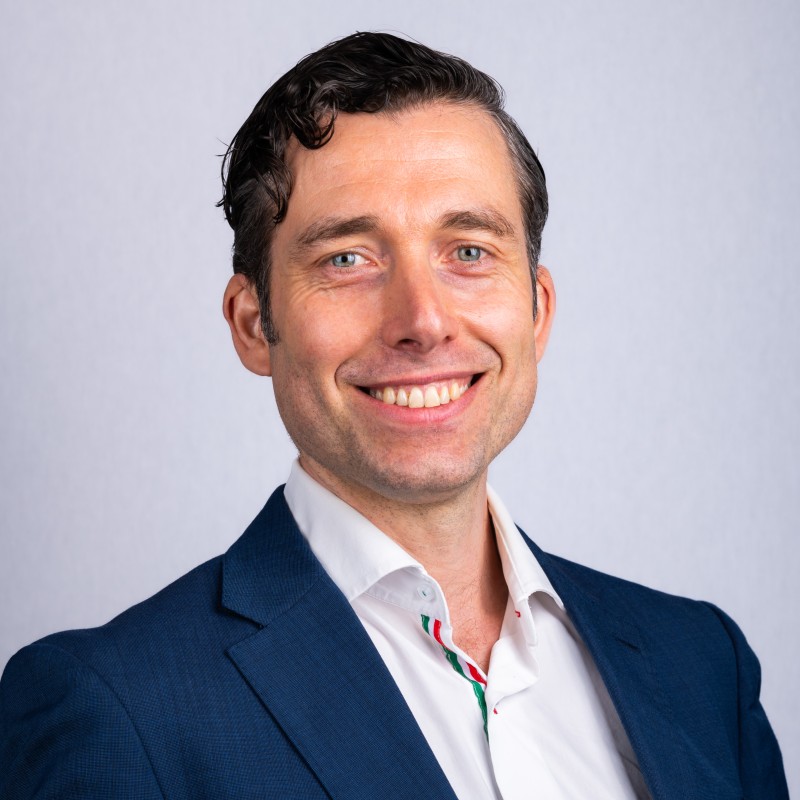
Frank Muusse is Head of Treasury, Insurance and Pensions at C&A. Before that he helped prepare the IPO of Philips Lighting (now Signify) and led treasury at CarNext. He has worked in listed, private equity-backed and family-owned companies, and says the core of treasury stays the same in all of them: cash, liquidity, funding and financial risk.
He talks to Jan-Willem and Philip about how treasury earns its place in business decisions: forecasts built around the decision they support, working with FP&A to explain forecast versus actuals, layered liquidity buffers, and how weather, shipping routes and consumer behaviour show up in a retailer's cash. On AI, he sees value in spotting anomalies and explaining numbers, as long as people keep the understanding and the accountability. His one thing: stay close to the business.
Read the conversation
Your credibility might start where you would have a technical solution or liquidity or cash management proposal. But your impact only starts if you're able to translate that into the business and also get the people along with it.
Meet Frank Muusse, Head of Treasury, Insurance and Pensions at C&A. He previously served as Head of Treasury at CarNext.com, Head of Corporate Finance at Signify, and Head of Treasury Operations at Philips, with extensive experience in corporate treasury and financial leadership. Frank shares his insights on the evolving role of treasury in modern businesses.
Connect with your business. Try to understand what are their day-to-day issues and, on a higher level, how is the company making money? How is the company spending cash? It's very important that the forecast needs to serve a purpose. It needs to lead to action or be able to lead to action.
How do you go further than "okay, this is a financial problem, tell me the solution"?
My vision on the topic is that...
Welcome to Treasury Leaders, live from Dotslash Utrecht. Here with us today in the studio is Frank Muusse from C&A. Frank, do you want to give an introduction of yourself?
First of all, thank you for having me here in this nice environment, also with an innovative atmosphere. It reminds me back of the days when I worked at the High Tech Campus for Philips, and also at a startup. So that's part of the journey, where I started in technology, first business analysis, then moving into treasury, further along to corporate finance, transformative treasury, and now I'm looking after treasury, insurance and pensions at C&A.
All right. And Frank, you now work at a family-owned company, but throughout your career you've worked for companies which are private equity-backed, listed companies, and now C&A. Can you highlight some of the differences you see from your perspective, working as a treasurer within those companies?
Yeah, perhaps I can split it into listed companies, PE, and the last stage where I'm now, which is family-owned. I think in a listed environment it really shows you something about the discipline of capital markets, about governance, about disclosure. If you go to PE, it's about speed. Sometimes implementing a treasury while the business model is still evolving. And now, being in a family-owned business, the time horizon might be a little bit longer. It's not going to the next reporting cycle, but the stewardship from the family-owned part, and then also resilience and strategic flexibility are very important. Those are amongst the differences along the three ownership structures. But what I also do think is that the treasury fundamentals are the same across the different ownership models, but the way how you adapt and implement them needs to fit that ownership structure and also the maturity the business is in.
And for you personally, Frank, do you have a preference for which ownership structure you like the best?
As a treasurer, I like it if something is not stable, so I like it when things are different, evolving, transformative. So in that sense I like having had the experience with the three ownership structures. I think not the one is better or easier than the other. I think it's that exposure to that difference that is the interesting part.
But then fitting what fits your personality as well.
Yeah, and also where you are yourself in your career at that moment. Because I can imagine if you are just starting in treasury, then it might be helpful to be in a little bit more stable situation, whereby you can learn from a broader treasury team or experience. And if you grow throughout your career, it might be interesting to be more in a building phase or transformative phase.
And the treasury size of the three main experiences we're discussing now: was the size of the treasury team comparable, or was one very big and one very small, and does that have an impact?
It was very different, I should say. Looking at the listed companies, I would say in general the procedures and the governance are more established, also due to the disclosure requirements which come along with being listed: capital market discipline, different stakeholders that you have out there, SOX controls as another example. If you would go to PE, I think it all starts with one person, one business idea, and then it can grow and expand fairly rapidly. So that is something about building and expanding a treasury. And then perhaps the family-owned is sitting somewhere in between. But in the end, I think the scope of the treasury function is more important than how many people are actually working in the treasury function itself.
So the scope is more important. And what is the scope that you see, then? What is the ideal scope?
The ideal scope, I think, is one that is evolving and continuously supporting the business needs. By that I mean there is a basic need for a banking infrastructure, a cash management infrastructure, because you would like to pay your suppliers on time, have the salaries paid for the employees, collect the cash from the customers. But it goes beyond that basic infrastructure. Once that has been established and is working quite well, you can go into other business support, like corporate finance, like looking after the right side of the balance sheet with the liabilities which are there, like the pensions, but also more strategic business requirements like working capital management and supply chain finance programs. So I think once you have the fundamentals in place, you control those and you have those set up efficiently, it can also create time to look into the other areas.
Frank, you have been working at Philips. You have also been involved in the preparations for the IPO of Philips Lighting. Can you take us along in that process? Like, how did you support that from the treasurer's perspective, and how did that help the business?
Yeah. Going to be a listed company. I think if I look back at the time, it was a very intense time to be working within Philips and on the project, but it also meant that you had to compress multiple years of treasury build-up into a very short period of time. You need to ensure you have your policies, you have your banking infrastructure, you have your relationships set up, you need to have your processes, also people need to be there. But it also makes sure that you need to focus on what is really important for day one and what can follow later. And to give an example about that: yes, you need to have a system, you need to have a process and you need to have people. But for instance a system, you could also work from a TSA perspective. You don't per se need to have it implemented directly at day one. It is something that might take longer, until the TSA runs off. And I think that balance is very interesting, because it forces you to ensure that all the core treasury functions are enabled, the current business is still being run as it should be from a treasury perspective, and it also makes you prioritise what needs to happen now and what can be done later. And perhaps the last element: it also teaches you that the day one of a go-live will not change if the treasury project is delayed. So you need to keep your priorities right and deliver towards the business or the project.
I see a theme with what you were saying before and here. Before, you were saying the role of the treasurer goes beyond the basics once you get the basics right. Now you're saying the same in going through the listing: get the basics right and then you can tier things later. Could you remind us what the basics are in your mind? What are the three, four, five musts that every treasury function needs to get straight?
I think treasury is about cash. It's about risk. It's about liquidity. It's about access to funding. I think those are the core building blocks of a treasury function. And then how to implement those building blocks into practical and understandable business requirements. So yes, on the one hand the banking infrastructure, bank accounts, cash flows: ensure that payments can be done, that cash can be collected, but also that you have the liquidity and the cash available to facilitate those business investments. Then from a risk perspective, ensure that if there is a certain exposure, which can be an FX exposure, you have the tools and the knowledge at hand to also support the business there. But then also going beyond what perhaps used to be core treasury, FX only. It's about interest, but it's also about credit risk, country risk, so that you have a holistic approach around those financial risks, but always be able to adapt that to business processes.
So have the infrastructure to be able to process and receive payments, have the money, or infrastructure, so that you have the money at the right place at the right time, and be able to monitor and manage risks. Those are the three musts.
Yeah. And I agree, and it always needs to be in a controlled way, because you need to have a repeatable process, that you can go back to what you have done, why we have done it and how it has been done, and also that that process can be repeated, so that the next time such a situation occurs again, you can apply the same process. I think that is also very important.
And what are the things that can wait? So this is the must. What comes later, what are the nice-to-haves? Important nice-to-haves, but nice-to-haves nonetheless.
So very fancy or sophisticated tooling or an IT system, I think those are things that can wait. First you need to have the process in place, the controls in place, that you know how to operate it, with capable people, and then tooling, I think, is one example of what could follow later.
Interesting, thanks. We've been talking in general about your experience so far. We mentioned C&A, that is your current role. Can you tell us something about C&A, for those who don't know it? It's a very well-known brand, of course, but can you tell us something about it?
Yes, my pleasure. So C&A has been in business for 185 years, so a very long time. A fashion retailer, originated in the Netherlands. It is in 15 European countries where we have, how we call it, our brick and mortar, so our stores, but we also have an online channel that complements the offline business that we have. And what we have here is value for good, so that we have fashion for all the generations that are there, from the babies to the youngsters to the elderly. So I think that's a unique proposition of C&A. And also, one element of being so long in business is that we have gone through several transformations already, and it is also something that is going on as we speak. And I do hope, since you're asking the question, that you'll visit our store yourself once in a while and also buy something.
For sure, for sure. As a good treasurer, you'll see my line item, my payment coming through. I'll give you a phone call when I do. Can you give us discounts as well?
I think we already have a very good offer. But please come to our stores and see what we can offer there.
Frank, I heard you talking about supporting the business a few times. Can you give us some examples of how a treasurer can support the business? And I recall, in preparing this interview, I read a quote from you on the website, in an interview, where you told a story about the city of Madrid looking to buy a lot of new lights for the city. I think it was about 200,000, and initially they couldn't really get the funding in place for getting the new lights. But then, I think, you as a treasury team came up with a solution that still allowed them, in a very innovative way, to get the funding. Can you tell a little bit more about that, or can you maybe also mention some other examples of what supporting the business really means?
Yes. Let me start perhaps by saying that I do believe that treasury is a support function, in the sense that the reason why treasury exists is because there is other business that treasury should support, facilitate, make better, simpler, add value to. The example you refer to is from my Philips Lighting time, Signify. And there was the question that the municipality of Madrid wanted to replace the lights in the city, which of course in itself can be quite an investment, a capex investment. So where treasury could step in is, with having bank relationships, with having insights in liquidity and funding, to think along with the business: okay, there is a certain capex investment to be made, but how can the payoff or the invoice process work? So in that specific example, instead of making an upfront one-off capex investment, we could go to an operational lease arrangement, and in that sense it could make a win-win situation, in the sense that the company could generate its sales over time, but also that the municipality could have very efficient LED lighting in place. That is already a few years old.
If I would look now at C&A, another example would be: our business model works in a way that we design fashion in-house, and we have most of our fashion, our merchandise, produced in the Far East. So it means there's a disconnect between where the idea, the initiation, starts and where the producing starts. Where treasury can then, for instance, add support is on the FX front, because the sales in Europe are mostly denominated in euro, while the merchandise cost is mostly denominated in US dollar. So that's one element: connecting sales towards a cost price from a business perspective, to add value with respect to the FX and mitigation. Another element is that the suppliers also have their cost base, and they need time to produce, and then there is also time to ship it from the Far East back to Europe, and to put working capital and supply chain finance solutions in place. Treasury can help facilitate or improve that business flow from a financial angle. I think it's also important to state that treasury can bring the liquidity, the financial angle, towards a certain solution, but it is not that we would own such a process. I think it's very important that the relevant business decisions stay where they originate, and in this example I gave, that would be the sourcing organisation. But to complement that, to work together, to understand what sourcing is trying to achieve, what kind of challenges they have, and how the treasury function or the insurance function can then support that from a liquidity and risk perspective.
And Frank, very interesting examples that you gave, but both of them underline the fact that you were at the table having the conversation, that you were known and connected, as treasury and as yourself. Do you have tips for our listeners, the treasurers out there who also want to go beyond the operational day-to-day, add value to the organisation, and be at the table having those conversations? How do you get there?
That's a very good question, and sometimes a challenge as well. But I think it starts with having the basics right. So deliver what can be expected from a core treasury function, so that you can already build trust, either with the CFO or with the business functions, that the treasury function will deliver. A second step would be curiosity. Connect with your business, try to understand what their day-to-day issues are, how they are operating, and on a higher level: how is the company making money, how is the company spending cash? If you connect those elements, connect them with business talks, it can help you understand how a business flow works and then also bring in the treasury angle.
And just perhaps to give you two more concrete examples about that. We now have our Dutch headquarters above a store in the Netherlands. So what I always do, every time I'm in the office, is go to the store just to sense and feel: what are my colleagues experiencing, how does it look, what is the customer base like? And an example there would be, when there is the paying for the merchandise by our customers, I can see that it takes several steps. They have a PIN terminal. Then I try to connect it with the banking infrastructure, the payment methods that we accept in the stores, and then see if and how we could improve, or could we make the salespeople's life easier? Because in the end, I think their purpose is not to facilitate the easiest or the best treasury process. It is to serve the customer and have an operationally very efficient process. So that is one example, on a very detailed level, going to a PIN terminal in a store. But on the other hand, it would also be, if there is a capex investment project, to make it visible in the business case. I should say, in addition to the business case itself, providing the treasury angle: what is the impact if you make an upfront capex investment, or what would it be if you go into a lease arrangement? That could be an element from a liquidity perspective. And then you could also combine it with a risk perspective. Now mentioning another example: if you have a logistics process, goods are being transferred from A to B to C. There's also a risk, for instance with obsolescence, but also with fire damage, and then the insurance, the treasury insurance angle, can come into play. So I think the added value can be there. Connect to the business, just speak to them, understand. Most people, including myself, love to speak about what they do day-to-day, and I assume that is valid for most people working, at least I hope so. And then try to map it to the things that you are doing or you could be doing. So have curiosity in what other colleagues are doing, have respect for the other businesses, the business flows and departments, and the challenges they may have, and try to think about how the connection could be there from treasury. And in that way it can help get you to the table.
I love that. Going literally to the floor, going to the shop, and finding out what is working and how treasury could help from there. Very nice.
Yeah, really nice idea to have the office right above the shop. That really helps you just wander around there and see how things are going, and get a feeling of what is actually happening in the shops. I was wondering: you have a lot of shops throughout Europe. How do you produce a cash flow forecast from the data of all those different shops? Can you take us through the process? Like, what kind of data is needed to accurately and reliably produce a forecast which treasury can use, and the CFO can use to base certain decisions on?
First of all, I think it's very important that the forecast needs to serve a purpose. It needs to lead to action, or be able to lead to action. And also that the forecast can have different time horizons. So if you look at the days, the weeks ahead, then it's very important to ensure that you have the liquidity at the right place, that you can make the payments which are due, and that you're able to collect the cash that is forecasted. Going a little bit longer, it is about looking at working capital, where investments are being made, capex, and supporting business decisions in that way. Going further out, it can be more about the strategic directions that the company would like to go in. If you then translate it into practical sources of data or tools that you're going to use: in the short term you have your bank data, your treasury system, where the payment flows and the treasury flows are in. You have your bank statements, which can provide a lot of data. Then you have your ERPs, which hold AR and AP positions, inventory levels. And then you should also complement that with business input: the business drivers, how they operate, what they forecast, what they are going to purchase at a certain moment in time. Also an important element there, I think, is seasonality. We might all love a very predictable, stable, flat or growing business, but that's not always the case, and especially in retail, in fashion, there definitely is seasonality, simply linked to the seasons. And then it is also important to stay connected with the other functions: FP&A for an economic outlook and business performance planning; also keep the connection with accounting, because in the end they are holding the books; and the business for input on the business drivers, the operational items. And then, as a treasury function, consolidate those views into a cash flow and liquidity planning.
You mentioned, Frank, at the beginning, three horizons of forecasts. Could you, for our listeners, put some numbers on the horizons that you use? Like, what is short-term for you? Is it a week, or 13 weeks already, and so on and so forth?
As said, I think it's important that all the different forecasts and horizons serve a different purpose. But what they have in common is that they need to drive action. So in the short term, it's very important, also from a treasury perspective, on a daily basis to ensure that you have the right liquidity, the right currency at hand to make the payments. So that's your cash management forecast, the short-term cash management forecast. Then, on a little bit longer, weekly, monthly basis, it's important to translate what is there from a working capital perspective into that business horizon, because it is also linked to the business horizon of when sales are planned or when an outlook is planned. So that normally goes from weekly to monthly, quarterly, annually. And then you would also go to a multi-year planning, to have a more long-term strategic view, so that the right governance bodies, the board, can make the right decisions, or at least have the information available from a liquidity and scenario analysis perspective and incorporate that in their decisions.
So for the short-term cash management, it will be a matter of looking ahead a few days to a few weeks. For the midterm, it will be a few weeks to a few months, or up to a year. And then the multi-year, well, by definition is multi-year. Is that right?
Yeah. And I think also, if you go for the days ahead or the weeks ahead, it's more important to be precisely right. If you go into weeks to months, it is to ensure you're directionally right. And if you go longer term, then at least that you make visible what the scenarios are and also what the trade-offs could be, and also the assumptions that are put in there, that you create that visibility. Because I think the added value of treasury can also be to make choices visible, to put them on the table, and not per se to drive decisions, because there are other governance bodies for that.
You also mentioned FP&A as a party or partner to work with. We know that the FP&A forecast, or the accounting-driven forecast, the indirect forecast, and the treasury direct forecast often go in two separate tracks, and bridging the two can be a painful exercise. Is this something that you do? And if so, do you have tips for our listeners who are going through this very problem?
I think what we have done at C&A is that we have brought them together. So within treasury we are looking after cash flow and liquidity, both from a direct cash flow perspective but also from an indirect cash flow perspective. It doesn't mean that we replace FP&A as such. It means we work together with FP&A, and then we have a split in ownership of parts of the process, whereby FP&A still owns the planning process, the economic forecast assumptions, but treasury there can complement it by translating those forecasts into cash and liquidity items. So what we try to do with the direct and the indirect cash flow is not per se that we want to have a 100% link to each other at the same moment. It is to understand what the drivers are that transfer the P&L and the balance sheet into cash items. So a lot of time we invest in understanding the timing of those elements, non-cash P&L items, and also certain business assumptions around it. And there I think treasury is well positioned to make that translation, because in the end a P&L and a planning end up in an indirect cash flow, and an indirect cash flow ends up in a liquidity planning, in cash. And that is also something that we then in the end see within treasury, because there we do process the payments and collect the cash. And also that reconciliation process: I think it's very important to reconcile the indirect versus the direct, but also the forecast versus actual, so that you understand what has actually happened, and then also what went according to forecast, where assumptions have shifted, or whether the economy or the actors were different. And in that sense we then also reconcile time horizons, but also the categorisation of cash flows. But I think that's also an important element: that you have multiple dimensions to look at cash and liquidity, and if you bring those together, they can complement each other, and that also helps in understanding and making visible what the business drivers are, where assumptions might have changed, and where economic reality might have had a different impact.
I see a theme, and then I'll let Jan-Willem ask a question. One thing I like in your story is a theme, the word "together". You mentioned a few times working together with your colleagues. Treasury and FP&A traditionally have conflicting or separate interests, and here you're saying "we solved it by working together". So that seems to be at least a takeaway for me from what you're telling us.
Yeah. A question about the actuals versus forecast. This could of course be a people problem: you created a forecast and you forgot or left out some data which you could have known beforehand. There can also be unforeseen circumstances. For example, you could have a very warm winter, and then your winter collection is not really selling as expected. What are some of the external factors that can really throw a forecast off in your business?
You already mentioned one, with the weather conditions. So that is something that is valid in retail, in fashion. But it can also be seasonality, in the sense that a spring collection has a different value, a different seasonality, than a winter collection might have. But also other elements, like consumer behaviour, and that can have to do with geopolitical situations, but also management decisions about inventory levels. And I think if you connect the indirect with the direct, if you reconcile actual versus forecast, it can give insight into what the drivers of the deviations have been. And that can also be one of the strengths of the treasury function: looking at the cash flow to make that part visible. Because in the end, if you look at short-term payables, well, treasury is doing those short-term payables, so they should be pretty right and exact, while on the other hand the consumer behaviour or the consumer spend might be more volatile. But then also the impact of business decisions made, well, inventory levels is one, but it can also be driven by geopolitical situations. What we now have in the world, whereby shipping routes are different than they used to be, with the Red Sea, with the Cape of Good Hope. It is about understanding those flows, being able to connect the cash in with the cash out, and then being able to make that visible, and also make it visible in a language which is understandable. Because that is sometimes forgotten: a complex financial situation also needs to be explainable to non-financial people.
And you mentioned, for example, and to explain to our audience, inventory levels as a decision can drive your forecast, or drive a deviation in your forecast. Can you explain why?
Yeah. So an inventory level can be a management decision: how much inventory to hold? Well, there is then first a purchasing decision. So how much do you buy? And then an impact on your accounts payable. But inventory can also have an impact on what you have available in your stores to sell to the customers. Too low inventory can mean that you don't have enough items that people would be willing to purchase. And in that sense, you can have a sales planning, but if you don't have the proper inventory levels to support that sales level, it could be a reason why there could be a deviation.
You miss out on forecasted revenue.
Exactly.
You also mentioned that you forecast for a reason, to take decisions, at the three levels that you explained. You also mentioned, I think at the beginning, liquidity planning and cash management as a means of achieving risk mitigation. Could you tell us more about risk and liquidity, and more specifically, how do you decide what levels of liquidity buffers to hold in your different currencies to mitigate the risks?
Yeah. I actually think it starts two steps back, and that is with the business strategy and also the shareholder risk appetite, because those are the fundamentals. On the one hand, what is the strategy of the business, where is the cash coming in, where is the cash going out, and then also what the appetite of the shareholder is for a certain risk. Then, if the business planning is translated into liquidity, it is about the cash flow forecasting and planning, the different cycles I referred to earlier, but it is also to ensure that there is liquidity in the short term and flexibility in the longer term. So the short term can drive a decision on how much cash you can invest, for how long, where, while still being sufficient for the short-term payments that you need to make. And what I also like about liquidity and access to liquidity is to have different layers. So to have an iron stock that you always want to keep, to have an additional part on top of that to facilitate seasonality or working capital swings. Next to that, also have access to committed facilities. And as an additional layer, also have contingency planning, so that you know, if something happens there in stress scenarios, which actions you could take. And I think the value is also to have that thinking before it actually happens. So plan around it with those different levels of available liquidity, and also keep them consistent. But consistency in that sense doesn't mean writing them in stone, because the business can change, the environment can change, so you need to constantly monitor those levels as well, and make sure that they are still sufficient and in line with the appetite of the business, of the shareholder.
Do you have examples? In the last months there's been a lot of geopolitical turmoil. I guess it has impacted C&A to some extent as well. Do you have examples of how that has driven the conversations or decisions that you have taken on this topic?
Yeah. So I referred earlier to how shipping is going, with the route from the Far East to Europe. A different route can have an impact on the lead times. But it can also mean that instead of putting X number of containers on multiple ships, you do it on one ship. Well, that can have a certain impact on the risk, on the value on a certain ship. And I think, again, sitting with the business, understanding what they are actually facing, sometimes they are restricted as well by available capacity, and then giving them visibility again: okay, if you do option A, this would be the impact; if you do option B, this would be the impact. And then not only showing what the impact could be, but also showing alternatives, or solutions to their problems. And a concrete example in that one would for instance be: you want to have an efficient insurance structure, whereby you don't want to insure too much, but you definitely don't want to insure at too low a level. And if you then adapt that to the business needs or the specific situation that is occurring, then you can also tailor-make it to the business needs and still provide an efficient solution in that way.
We talked about foreign currency risk. You mentioned you buy from suppliers and you pay them mostly in US dollars. How do you hedge that foreign currency risk? Like, do you hedge it, for example, when you sign a new order, or do you make a forecast and then hedge that? How do you go about that?
I think it's also there about understanding the business cycle and the economic exposure. Because, referring to the merchandise purchasing, the obligation doesn't start when the invoice hits the ERP system. Decisions are normally actually made earlier, when a commitment to purchase is being made, but also, on the other hand, when prices are being set to sell the goods in the stores at a certain price. So understanding that economic cycle, that is where you should look at it from an exposure perspective, and then also from a hedging perspective. So that is something that treasury should do: understand what the economic exposure is, give the options which are there for risk mitigation, and then, if needed, also actively go into the hedging of those exposures. So I think what treasury can provide there is to take away uncertainty or volatility, by protecting, for instance, in this example, margins, but also to give the business time to react. Because that is, I think, one of the important things that hedging can do: reduce volatility and give the business time to adapt to the new situation.
Frank, you mentioned before the must-haves and the nice-to-haves, and you mentioned the next IT gimmick, the next IT solution, falls into the nice-to-have bucket. What is your take on treasury and technology in general, broadly speaking?
I think it's a very important connection, and nowadays you cannot do without being tech-savvy and having automated tooling solutions. So tech is a very important part of treasury nowadays, but that does not mean that it can fully replace the basics, because the understanding of the basics still needs to be there. And I always try to explain it: you still need to know what is debit, what is credit, how does a cash flow move from one system to the other. And I've said it somewhere before: it is a tool, it's not a solution. And by that I actually mean, I think you should have a proper process first and then try to automate that, instead of envisioning that a best-of-class IT project will give you the treasury operation or process. So I think it's the use of treasury technology at its best in a certain process, instead of the use of best-of-class technology in itself.
Yeah. The best way to automate a process is not to have the process at all. Eliminate whenever you can, as an example. But that means having a look, being critical and fixing the process before you put technology on it. And when it comes to, well, everyone is talking about AI, that's the new game in town. What are your thoughts on AI in treasury today?
I think the technology, the automation, has been there and will also be there. So automation, RPA or however you want to call it, with a stable, simple process, can still add a lot of value, because it takes away non-value-add time of the team. AI can be especially relevant, I think, if the data is less structured, or anomalies need to be found, and also when certain explanations are needed. So in that sense I'm very positive about AI and that it can help redefine the treasury function. I don't think it will take away the accountability of processes from the people. And one other concern or challenge I would have with AI in itself: there might be a certain bias in AI to get to a common standard answer, instead of having a unique, fit-for-purpose solution. That's one element. And the other element, and then I'm referring a little bit back to my own situation as well, where I literally started at an accounting firm, with really the basics, doing all the checks and balances. It was a lot of manual work, but it helped me understand the very basics of checks and balances and processes. And if you would automate those kinds of checks and balances with AI, which probably, and I believe, can be done, still the human understanding of what AI is actually doing does not fall away. So I think that is important as well: to keep the understanding of what AI is actually solving or speeding up or eliminating. The human, the team, needs to keep that understanding. And then also to have that in a controlled way. So in that sense I would say that AI needs to be able to be repetitive. If AI is producing a certain solution or outcome, and it is asked to do that again, it should give the same answer.
Explainable and repeatable.
It's actually a very good point you mentioned, Frank. I think we all learn that way: when we get a very hard problem, at first we don't understand anything about it, then we really dive into it and try different things to solve the problem, at some point we understand it, and then we understand the whole concept better. And that's the way we learn. How do you think we can guarantee that future treasurers, and in general people coming into corporate, still understand the underlying processes when they have all these nice shiny tools at their disposal? And even we ourselves are also guilty of that: if we have a very repetitive type of task, we try to automate it. But luckily we have done it manually for years, so we understand what needs to be done. I can see a risk that the new generation is so used to using AI tools that they just immediately, without overthinking the problem, go and ask the AI agent: okay, solve this for me. How much of a problem do you think this is going to be in work in general?
I think we need to be aware that things are changing, and certain methodologies or ways of learning that were valid in the past might not be valid in the future. So I think we need to have an adaptive, iterative, open mindset towards that. Nevertheless, what you just said resonates with me, and I would give another example first. When we were younger, we could drive a car, read a map, and then know how we could get from A to B. And I've experienced myself sitting in the car with a friend who was looking at his navigation and then said, "Okay, but the navigation said I need to go straight," but then actually there was water. What I'm trying to say with it is: keep two questions. Ask the question why: what am I doing, why am I doing it? And also keep the curiosity and the interest to understand that part of the process. So yes, automation can help you, it can speed it up, but you still need to understand, or be able to answer, the base question: why is that being done, and what is being done?
And I know you're passionate about educating the next generations as well. You are a lecturer at university. Why do you do that?
Multiple reasons. First of all, I think lecturing about something you have a passion for is fun and interesting. But also, lecturing to a finance community gives me an opportunity, and a learning myself as well, because they sometimes ask what may sound like basic questions, but they are insightful, because they can ask: why is that a risk there, or what is that product delivering, or what happens if that assumption is not valid? And it forces me to think back to be able to answer those questions without going to default answers, which might be in jargon or already known in the company. A second reason would be that it gives me exposure to different sectors, different companies, so I think that can be insightful as well. And last but not least, I think I have been given training and education throughout my career, so this is also giving something back to the community, by sharing what I've learned with students as well.
And if you look at your career, what are the biggest lessons, the biggest things that you had to learn, and also maybe some things that you had to unlearn?
Perhaps to start with unlearn, because sometimes that might be the hardest to do. One thing that stays with me is: you might be technically very right, but it is not said that the technically right answer is always right at that moment. The answer that you have also needs to fit the company, the timing and the capability for the solution that you're providing. The second one might be that centralisation and automation in themselves are not the end state. They should support what you are doing and not be an objective in themselves.
And you had to learn this?
And I had to learn this, because earlier I thought, okay, that's the holy grail that we need to go to: only centralisation and automation, that's what we need to do. And perhaps the third thing as well is that experience is not about knowing, or being more certain that you know the answer. It is about asking the questions earlier. So also for yourself, to keep curious, keep asking the questions. Then the first part of your question links to the experiences that shaped me most. Perhaps I would split them in two: larger external situations that happened on the one hand, and on the other hand internal or company decisions. So if I look at the external situations, I would think back to the financial crisis, the collapse of Lehman, that really forced me, in a very short time, in a very unpredictable, volatile world, to make decisions very fast. The other one would be, of course, COVID, which also changed business models very rapidly, going from brick and mortar to online for a few years, and then actually after that moving back again, whereby consumers are back on the street, in the shopping centres again, where during COVID they used to be online only. So those are perhaps two external situations that shaped me. If I look at internal situations, then I would be thinking about IAS 32/39. That was a change in the accounting standards, and it was something new for corporates, that they implement fair value accounting of derivatives, hedge accounting, but also effectiveness testing. And that actually taught me that sometimes it can be covenants or rulings, or in this case a change in accounting standards, which might impact the business processes and the setup that you run, and that you then also need to adapt to that. And the last one, and it was a very pleasant one, was the IPO of Philips Lighting, because, as I said, it compresses a lot of changes into a very short moment of time, and also you need to deliver against the set deadlines and make a split between what is really important now, what really matters now, and what can be done later.
I want to go back a second to the first thing that you said: that you might be technically right, but you learned with experience that sometimes it's not absolutely right in the context where you are. It feels like there's a story there. Is there a story to tell, an example where that happened?
I can give you a technical, or a tech, story around that. So we were implementing a TMS, a treasury management system, a few years back. And at that moment it was already known, and perhaps I'm getting a little bit technical now, stop me there, but we now also have a change in the XML language, in the standard. If I put it very simplistically: there was a certain banking standard language for how systems communicate with each other, which has been out there for many years now, and there is going to be a change in the content of that messaging. So back when we implemented the TMS, I was aware of the new ISO standards upcoming, and I put forward to the table: yeah, let's already implement the future standard, because then we don't have to do it later.
For payments, or for...
For payments, indeed. But at that moment the organisation was not ready to do, let's say, those two things at the same time: implement the TMS and make the changes to the language of how systems talk to each other. And we had to split it. So I might have been technically correct at that moment, with the technical knowledge, but the organisation was not ready to fulfil both needs.
It's interesting. So you need to balance change management within the digital transformation, and those two don't necessarily go together that well.
No, I think you're also touching on a very interesting element nowadays of the treasury function: being the change manager. Because also there, it's not only about having the right solution or the right policies and governance in place, but it's also being able to explain it and to get buy-in, so that you don't only design it but you need to lead and implement it. That's what I would link to the change management that you refer to. And that is, I think, also a broadening of the treasury function nowadays, whereby in the past you might have been very specialised, doing certain things where a lot of people don't understand what you're doing, but apparently it's working, so it shall be okay, hopefully, and in control. And now you need to step out of that, go to the business, and also explain changes, but then also be able to put that in non-business, or non-treasury, language, and be able to implement that. Because I think if you look at a treasury function, your credibility might start where you would have a technical solution or a liquidity or cash management proposal, but your impact only starts if you're able to translate it into the business and also get the people along with that. And that is where treasury knowledge and capacity come together with impact, and that is also something I see now: it is that combination that is really needed for the treasury function.
Yeah. So you're saying basically that the treasurer of the future is not only a specialist anymore, but he or she also needs to be able to go out there and really explain the need for certain solutions, or the way we're doing things within the organisation, and really be out there in the field to sell the whole story, and not just a little part of it, and do that really well.
That little part is, I think, definitely not sufficient anymore. But indeed: going out there, connecting with the business, understanding what they are doing and why, and then bringing solutions, bringing options towards that situation. And then indeed also having the business acumen, having the business language, and being able to be a change agent, or a transformative treasurer, as it is sometimes called nowadays. You need the communication aspect, but also the translation and implementation aspect.
How do you foster that skill within the students you're lecturing? Like, how do you go further than "okay, this is a financial problem, tell me the solution", towards a way of getting there and a way of selling the story? It's maybe very hard to do that within one course, but in general, your vision on this topic.
My vision on the topic is: never stop learning. So always try to improve yourself, expand responsibilities where it adds value to the business. Keep asking why you are doing something, or why the business is doing something. So it is that eagerness to learn and the eagerness to improve. And I think those can be two key drivers to keep you adding value to the business, but also to be able yourself to keep changing towards new situations. So external education can be one part, but learning on the job is definitely very important. So also for the treasury function, including myself: I go out there, speak to other colleagues, once in a while I go to banking events to speak to others, to hear what other kinds of solutions there are. But also, definitely nowadays, beyond that, fintechs are very important in the playing field of a treasurer. So go out there, read, listen, learn, ask questions. And I think that's more a behavioural aspect than perhaps a magic book that you can pick up, or somewhere you can go. It's about that combination of continuing to be willing to invest and learn, and having that eagerness to do so.
Frank, we've been covering a lot of topics already, and we're coming to an end. I would like to come to the closing. We have a tradition where we ask you: what is the one thing you want to tell our listeners? So in a minute, in a nutshell, if there's one thing you leave us with, what is it?
I would say: as a treasurer, stay close to the business, and while doing that, keep being independent. Distance doesn't mean independence. And also understand how your company is generating cash and how it is spending cash, and then be able to translate those financial elements into something that the business can understand. And I think if you are able to do that, you get closer to the business and to value-added elements, and I think that can also be very rewarding for yourself, because it makes you step out of the ivory tower of treasury technology only.
Thanks, Frank. It's been a pleasure to have you here with us. Very interesting topics. If the listeners want to follow you, how can they do that?
First of all, thank you for having me here. It's always lovely to talk about a passion. I'm on LinkedIn, so I think that's now the most common way to get in contact, and I'm happy to respond if people have questions. I'll try my best to do that one-to-one as well.
Thanks. And we'll see you at the C&A store, at the payment machine.
Excellent. I will hold you to that.
Sounds good. All right. Thanks, Frank.