
AI in Treasury for Finance Leaders to Boost Forecast Accuracy by Cleaning Data
In this episode
Read the conversation
If you automate a bad process, you will simply get bad results. Treasury is very interesting. You meet liquidity, risk, financing, and you are involved in the day-to-day operations of the company. For me, a company is its people. You can have everything automated, but it all comes down to the people.
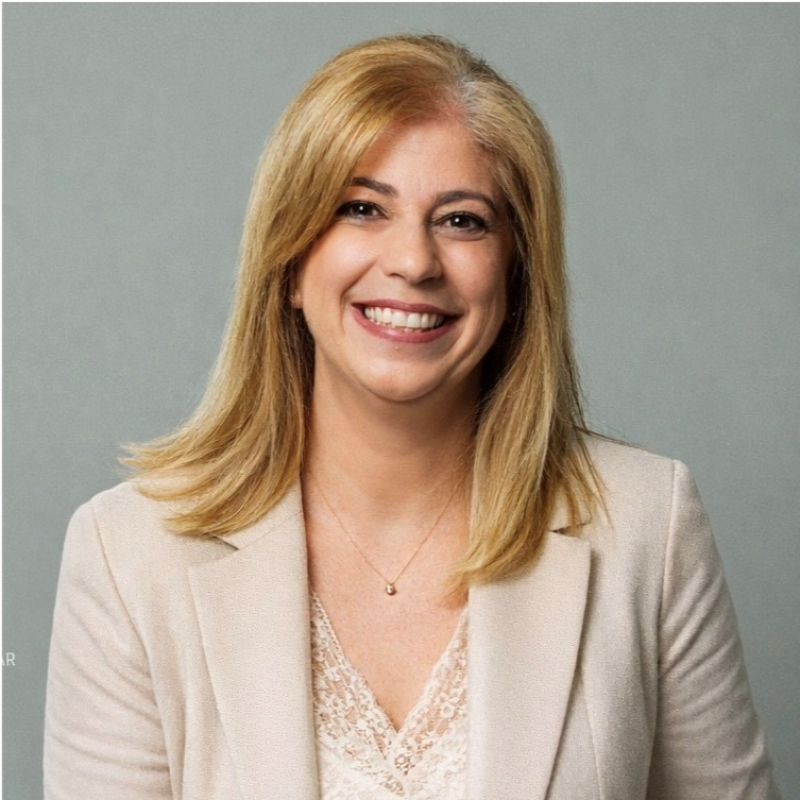
Marianna Polykrati is the group treasurer at Avramar and co-founder and managing partner at Tetraktys Treasury. She specializes in corporate treasury and M&A integration, helping organizations build and lead treasury functions.
We will solve the quantitative issue, but we will need to be working on the qualitative. They will bring you the trend, but you need to understand why this trend is happening.
Do you think at some point we won't need to buy treasury systems at all anymore, and we can just tailor-build everything from scratch for our company?
I still believe that it won't replace it. Maybe it will help them.
All right. Welcome, Marianna, to Treasury Leaders. Glad to have you with us today. Marianna, I know you as a person who has been working in treasury for a very long time, very eager to work on automating treasury processes, but also as someone who has a very holistic view on different types of topics within the organization. You're also very much a people person. Can you tell us, with all of these skills, how did you end up in treasury specifically in your career?
Thank you, Jan, and thank you for inviting me, first of all. It's very interesting and challenging to have the opportunity to talk about treasury, which has become one of my passions right now, and automation, which I think is starting to become my second passion and second nature.
I really didn't initially plan to become a treasurer. I started at a period when everyone was joining banks, banking institutions, so I started my journey in the banking sector. Then I switched a bit, going to venture capital, and for some reason fate brought me to a corporate treasury department, where I started, I would say, in 2006, and I have remained till today.
Look, treasury is very interesting. It sits, I believe, at a very interesting intersection of the company. You have the opportunity to be strategic. You meet reality. You meet liquidity, risk, financing, and you are involved in the day-to-day operations of the company. It's incredible when you go and visit the factories and talk with all the different departments. And for me this has happened in the three companies where I worked as a treasurer — in Chipita, in Vivartia, and in Avramar as well. It is an ongoing status; it's never static, and you are always faced with something different. And I think the whole geopolitical and macroeconomic environment always gives you new things and new challenges to handle. So I guess this is pretty much how I see treasury.
Yeah, all right, thank you. And as I know you, you're very much also a people person who likes to connect different people with one another — for example, working across different business silos. How important do you see people skills in treasury? Because I think we're reading a lot in the news that some companies are replacing people with bots or AIs. But how do you see the importance of people within an organization?
For me, a company is its people. You can have the best product in the world, you can have everything automated, you can have a great structure — great — but it all comes down to the people. So for me it is at the top of my list. And treasury, as I said previously, is a very cross-functional role. You're not stuck in numbers, or with one person you have to talk to within your department. You talk with accounting, you talk with IT, you talk with operations, banks, auditors, shareholders, stakeholders — and you can do all of this in the same week or even the same day. So you also need the skill to adapt your communication to talk with different people who are expecting different things in a different manner. So for me, I believe communication is one of the top skills that we need.
Now, I know what you're saying about automation and technological knowledge, but I will tell you, it's something you can learn. If you have become a treasurer — and if you have become a treasurer in Greece, where we have gone through a very difficult, prolonged liquidity crisis period — you have become quite resilient, and changing and trying to adapt to new systems is something you can do. You just need to focus a bit and you can do it. So we need to give our teams all the chances to educate themselves, regardless of their age — whether they're 24 or 34 or 54. Everyone can learn and everyone can adapt to the new technological solutions.
Treasury structures are quite lean. We don't have departments with 20 or 30 people. So usually we are running around, and from the 10 things we have to do per day, we do only four or five. So for us, technology and automation will help us do and handle the remaining six or seven that we haven't tackled yet. So I believe it's going to be a very good tool to use, and it will bring us — how can I say the word — more knowledge of what we need to fix in our company.
Yeah, I think that makes a lot of sense. And what we've seen — and we have worked together in the past — is that robotic process automation, or RPA, has been quite a hot topic within corporate treasury for many years, and now we're seeing a shift towards AI-powered automations.
Correct.
How do you see automation in corporate treasury? To what extent do you think we can automate treasury processes, and will there be humans needed at all times to still look at the final result? To what extent can we go, do you think?
Look, we have worked together and we have known each other quite a while, and you see that in general I like to experiment a lot and be a guinea pig a bit, trying to see what we can do with automation technology. I believe that we will change the thinking. As I say, because we're cross-functional, we see and adapt quite easily to the mindsets of different people. So having a tool like automation or robotics to help us in the manual processes — where no actual qualitative analysis is requested and it's much more quantitative — will only help us be much more efficient in our roles. So I don't anticipate that we will have any issues with this.
But I want to tell you a nice story that I heard the previous day, from a CFO of a very big group here in Greece. He was trying to set up his department, and set up the treasury department, so he was looking for a treasury officer. I looked at him and said, tell me, what are you looking for? And he told me, look, I have five very nice CVs, but these two are very traditional treasurers, and these two are quite modern. I said, what do you mean, these are traditional and these are modern? No, no, these guys are going to come and they're going to automate everything. And I said, "What do you mean, they're going to automate?" He said, "I want them to push a button and have everything come out of the system." And I said, "Okay, and how is your data? How are your processes? How is accounting operating? How are operations operating?" And I found out that his accounting was not in a very good condition. He said, "Oh, they're mixed up with a lot of paperwork." So, how are you going to automate the next step?
So I would say, for me, I am very much in favor of automating all the manual processes. But then parts like cash flow forecasting — I believe these are the things that I would really love to still keep for myself. I can maybe have trends coming out of AI, or historical data from the ERP, but you still need to put your mind in and give some results and trends. Because in treasury we are never flat in our work; we're not completely standardized. On a weekly basis you have something extraordinary happen, so you have to be able to change this and make the variation in your cash flow forecast, which a machine will not be able to do at the end of the day.
Yeah. So if I hear you correctly, and from your nice story, I think we can say that there might sometimes still be a mismatch between what some CFOs or other business leaders expect to be possible with automation when it comes to corporate treasury, versus the reality. Because indeed, even automation tools such as AI robots have to work with the data that's there, but to really make sense of the data — that's still up to the human so far, to be able to handle it in the right way.
If you have bad processes and you automate a bad process, you will simply have bad results faster. You will just have the same results, the bad results, but you will have them faster, and it will maybe give you a confidence that they might be correct. So this is not right.
Yeah, I've noticed this firsthand, because we're automating a lot and we're also using AI in the process. But if you just let AI loose and let it do its thing with its own interpretation, there are quite some risks involved there — especially working with different data sets, in how to combine the data and looking at the specific details. That is something where I still see AI struggling a lot. So I very much agree with your statement that for the coming years we need people in treasury looking at the steps produced by any automation and seeing whether they are indeed correct.
So, looking towards the available systems on the market: I think there are a lot of treasury management systems that can automate a lot of work for corporate treasury teams. But do you think we always need such a treasury management system from a specific company size, or can we solve certain treasury processes, or the automation thereof, in a different way? What is your experience there?
Look, I have two points here. First of all, I completely agree with you that setting up a treasury management system is not always the optimum for every single company that has a treasury. You have to go back. You have to drill down. You need to do a mapping — an architectural design, a blueprint — of what your treasury does today and how you can improve it. Check all the processes that you have, check all your data, and find out exactly what you're targeting. So there are cases where you can find the solution in a simple RPA or a BI report, or in automating a little bit and standardizing your Excel file and maybe building an agentic AI that will help you make a very small cash flow forecast, or whatever else you need. So it could be something very simple for you as a solution. Or you can have a quite complex organization: you need to have platform visibility, you have hedging, you have a lot of derivatives — say in commodities, in interest rates, in FX — you have debt, different types of debt, so you have a huge structure. In this case, yes, of course a TMS would assist in having a correct structure, and you can have exactly what you want at the time that you want. But it's not always a matter of this. For me, I believe it's very important that treasurers really understand this, and we're working a lot in Greece on this — we're doing small round tables in order to understand what exactly our needs are.
And the second point that I wanted to touch on here — and this is a comment that I received from some fellow Greek treasurers — is that there are too many service providers out in the market now providing solutions. So as corporates we want to see everything, and I think we lose our focus. We need to find exactly what we want to do in the organization, map it, do the blueprint, and then go to the service providers that can help you. You can have a TMS, you can have a TMS light, or you can work with a consultant to make a much more tailor-made automation program for you. For me, in Avramar we're looking at the third solution a bit right now. We are investigating this, as we are at a very transitional stage right now and we are going to make a lot of corporate transformation. So what we're going to do is try to automate more of our daily processes, and then we're going to start looking at different solutions.
That sounds great, and I know you have been very active on this, really looking at what we can do with the tools that are out there, also when it comes to connectivity. And you have been pioneering — I know you were among the first users to really use some of these premium APIs which are offered by banks to corporates. What are your experiences there, your learnings? What have you seen — what works well in implementing an API and what doesn't work so well?
Look, in the beginning — I think it was a year ago. I joined Avramar three years ago. The first thing was to structure the department and how we work. Second was to build all the processes. The third year was to clean all the data and bring in the connectivity for my cash visibility. Yes, we started with APIs. We had a very nice company that helped us with all the APIs and setting them up — I don't know if I can say the name, but anyway. So we set it up. It was a long-term project, because we were learning, and the Greek bank that we set it up with also learned — and they were, I would say, the most modern bank using this; technologically they are the most advanced, I believe. It took us quite a while to do it, but we did it, and we have it. We are still working with the Excel files for this, but we now retrieve all the data that we want, we have all the analysis that we want, and then we put it in our Excel files for the visibility. The next step was to go through an RPA process — remember, we have talked about the robotics previously. But AI is catching up, so maybe we need to see whether we go through an RPA or go directly with an agentic AI hub being built for us and helping us with this data. So we delayed — it took time for us — but my team is quite comfortable. Almost every single one of my team knows how to work with the APIs, so it's quite interesting.
Yeah, that's a great case study, I think, of what works and what doesn't work when integrating an API. Sometimes the bank offers an API, but it's not really ready for production use. But banks are getting there — at least more and more banks, from what we see from our own experiences. And I think, as you mentioned —
That is correct. There are, I think, three other banks joining as well. I do have a question, though — maybe I will put it as a question rather than a reply: some TMS providers don't want to use these, which is something I don't understand why, because they say the APIs are still quite disruptive and don't operate and function at 100%. So this is one of the things that I'm trying to understand and challenge right now, and say: we have something that is much better — why can't we utilize it?
Yeah. What we see from our clients is that it's not always very desirable — it sounds a bit counterintuitive — to get near real-time information, because you also need to run all your processes within your treasury management system, to refresh the data, reconcile it, et cetera. So some businesses prefer to have only the end-of-day statements to run their TMS processes. But I think there's a lot of value in at least having the real-time visibility of how much cash you have available at this moment, and not yesterday end of day. So I do think that slowly but surely the different systems will catch up, but the adoption of APIs is indeed not as fast as we all hoped it would be — because in the end, who doesn't like to know exactly how much cash they have today, at this moment, within their company?
So indeed. And you mentioned that RPA is slowly getting replaced by AI-powered tools. You have Claude Code, which basically allows you to build, in a relatively short time, a tailored automation that specifically works for your company. How do you see this evolving? Do you think at some point we won't need to buy treasury systems at all anymore, and we can just tailor-build everything from scratch for our company? Or is there always room for these solutions which have already figured it all out and which we can just deploy as turnkey solutions?
I will ask you this question: do you think that AI will replace ERP systems?
I don't think anytime soon. It's still a very solid kind of system. I'm doing a lot of AI coding, for innovation and for fun as well, and what we can sometimes notice is that the AI still makes mistakes. It can delete data without you asking. It can go off the path you have asked it to follow. And when it comes to vital data such as ERP data, you don't want an AI directly interacting with that.
So I would say the same for the TMS, because you have data that needs to be accurate. So for companies that use a TMS, that are big and large and complex, I still believe that it won't replace it. Maybe it will help them in some judgment calls, or in retrieving specific data and analyzing it, or making comparisons. I would say — let me set things up — when you have debt, and you have the term sheets, and you negotiate with the bank, and you have already negotiated with a couple of banks and you have a standardized form of a loan, what you can do is use your agent hub and say: look, these are the terms, these are the last 10 term sheets that we have received, and this is the new one — let's see what the differences are, and we can fix this. So I still believe that it won't replace things 100% regarding the data, but it will help us improve a lot of things.
What I am confused about right now — and I am reading a lot — is that I get confused with the LLMs, like Claude and Gemini and ChatGPT: what is good for what. Because I see some people testing, say, one machine and then the other, and every day someone says: I have this, and these are very good for treasury, but this machine is not good for treasury. What I have tested is that, in general, when you ask a question and you give a prompt, it has to be the best the first time — because if it doesn't catch it the first time, then when you rearrange and ask the question again, it starts tweaking and making different assumptions. So it still learns. I think you have a better view on which is the best machine, but we will discuss this separately, I think.
Yeah. Well, I think you're right, and different LLMs are more performant for specific tasks. But what I found to be working in corporate treasury is to really develop an agent around it that knows: okay, your data as a treasury team lives here, and this is how I should interpret it. When you're just feeding data randomly into an LLM, it won't have the proper context. But using an agent framework around it, you can really teach it how to interact with your data, and that can give good results. But I also acknowledge what you say. It might work better to start relatively simple, just feeding it with some term sheets and maybe some covenants, and monitoring that. That's —
Some forecasting assumptions, some liquidity simulations, anomalies in payments maybe, or a bit of risk — the euro/USD risk, some of these things — or hedging strategies compared, or the trades where you buy and sell your basic currency. I think some tests like this would be interesting. And I think it's of even more interest in other functions of finance. In accounts receivable, for example, I believe it can assist further in detecting, from the historical trend of a client, when a client is signaling that it's not going to be paying right on time, or when something changes in its paying habits — and the same when we have suppliers as well. So I think it can work a lot in finance, not only treasury.
Yeah. And when it comes to treasury — back to cash flow forecasting for a little bit. Suppose you were to have an AI system within Avramar that would be able to categorize all your historical transactions, read all your known future cash flows — items from the ERP, but also from other relevant systems which contain cash flow data — and that is able to analyze specific patterns in your historical cash flow. Would you say that it can be a useful tool, if it fully understands your data, to at least assist you with forecasting? Or do you think we are still a very long time away from that?
Look, I think it will be a good connector of data. It will be able to pull the correct data from the ERP, and to have the correct data from, say, the Excel file where you have the capex planning, which is not exactly in the ERP. You can also have extraordinaries and trends where you have feedback from credit control and from commercial. So it can connect all this data and put it in one place. But then you need to be the qualitative part, because AI will do the technological exercise; you then need to start discussing with all the departments and collaborate across the whole organization in order to revisit the numbers and check that they are okay and that they are the proper ones, and then you need to start interpreting the numbers. This is the basic point. We will solve the quantitative issue, but we will need to be working on the qualitative. They will bring you the trend, but you need to understand why this trend is happening.
And the truth is that when you have a lot of extraordinary events — like we had the war in Ukraine, and now we are having the Middle East right now — it would be great to have a tool where you say: this is my initial budget; we expect the rise of the cost per barrel of oil; we expect an increase in raw materials; let's see how this shifts, and do the liquidity forecasting with a distress scenario analysis. Or a different one, from the market — we have the fish price, and the basic assumption is the high fish prices that we have during this period. What happens if there is a decrease of 10%? What happens if the dollar is impacted more and starts devaluating? These scenarios, I think, it would be able to do — not AI as it is, but building, again as you said, an agentic AI, which we are testing a bit this period. So, building an agentic AI to have this data in order to make a trend and, with the assumptions that you have, build you a potential change in your cash flow and liquidity for the following 13 weeks — and maybe being able to take the 13 weeks that we have as treasurers to 20 or 24 weeks, and start opening up the period a bit — though not by more than 3 months, I would say.
Yeah. Would you say longer than 3 months it gets really unpredictable, with all the —
With all the extraordinary events, yeah.
There are many patterns that you cannot put in. Yes, you have the trend.
Yeah, indeed. It would be very interesting to see — and I think it will be quite different across different types of businesses — how certain geopolitical events will affect, or have affected, your cash flow. And if you can derive those patterns, you get a better sense of the risks, I would say. So that's another great use case, I think, for applying AI or agents directly to your treasury data and correlating it to real-world events.
AI could help us with the data part, but the behavior patterns are something that we need to put in.
Yeah. And I think what is interesting, at the very least, is that it basically forces us to think about our data structures within a company: how do we organize our data? How can we reuse our data across different applications? And that base layer, I see, is missing in a lot of companies. Luckily, it's now getting better. People are seeing the need for BI tooling, but also, in the near future, being able to use AI on your data in a good way — that requires first getting your data foundation right. So I do see that as well.
Marianna, if I may ask: you have been working in Greece for many years as a treasurer, across different companies, and you have been involved in the treasury community there, setting up different communities. How do you see the Greek treasury community? What is different in Greece compared to other countries?
Well, look, as you say, I have worked many years here in Greece, in different functions, and treasury is basically the last one — I don't want to count the years that I have been in treasury. What I have found out is that in general we are quite a close community. I think, as of today — I have counted LinkedIn data and some other data — the total number of treasurers here in Greece is approximately, I would say, 520 to 530, including some roles in payments or in treasury accounting as well. So we are, I would say, around 550. We have a very good percentage between men and women — this is very interesting in Greece: we have 45% women and 55% men, though women are fewer in leadership positions, where the percentage falls to 35 or 36%. But we are quite close to each other and we don't feel competitive; we try to help and support and assist each other. And we have worked a lot over the last five or six years on this, because what we understand is that there is power and strength in unity. At the end of the day, when it comes to the banks, we are all treasurers facing the banks together — regarding costs, regarding procedures, regarding processes. And when we have the same problem, instead of going by ourselves to the banks — me going as Avramar, say, to one of the big banks and saying, hey guys, this KYC, we have to fix it, or this banking platform doesn't work — when we go together, it's very easy to have a nice discussion, because they see that it matters. In previous years, the bankers used to invite only the CFOs of the companies, not letting the treasurers join. Now we have personal invites as treasurers, and we go and have a nice place at the table to discuss our problems and issues with the banks. So this is opening up quite a lot, and I think we have really worked a lot on this.
The second thing, I believe, is that in Greece we have a lot of companies that are family-owned, which is usually a bit more conservative — discussing treasury wasn't one of the things. But these companies are changing. The new generation is changing the mindset a lot. Yesterday I attended a great session from one of the biggest flour mills here in Greece — the seventh generation, I think, imagine, family-owned — and he was so open, so modern, doing a lot of things and pushing a lot. So I believe even the family-owned companies, when the new generation comes in, are very open and leave us a lot of room to do things. And it's not a competition here in Greece. In the past, I believe, there was also a small competition between CFOs and treasurers — where is the limit, where do we go — but I think we have now found our roles within the organizations, and we are considered to be an asset, I believe.
Yeah, that makes a lot of sense. I do consider treasurers to be a big asset, actually. You mentioned the younger generation, and I know you like to give a lot of young people the opportunity, within the teams you have set up, to grow their career and invest in their skills. Why do you choose to invest so much in these young people, and to invest a lot of your time to make them flourish within the organization?
Look, I believe as people we always have two ways we can do things. One is: whatever bothered us in our past, we continue to do it. Or we can change it. I personally, and my generation, didn't have so many opportunities to see things, to have exposure to different things, to be educated and be given a big educational plan and be supported — so I want to do it the other way. I really want to support this. What I have missed, and what a lot of people in my generation have missed, I want to change; I don't want to keep it as it is. So when I go to meetings — and the good thing is a lot of treasurers here do it — we have our juniors coming with us, because usually they were not given a seat at the table. So we bring them, so they can see, they can shadow us, and it's interesting. And you know what? When you educate your people and you give them the opportunity to open up their skills, they become very helpful in assisting and helping and doing things that will improve the business, and you learn at the end of the day. So I don't want to have people with the same mindset as me. I could do it by myself; I could be like an octopus, with eight legs running around and doing all the same things — I will do this, I will do that, et cetera. I need people that are different from me. I'm very fortunate: in my team we have a very diverse group, age-wise and skill-wise. Everyone brings his or her unique skills to the table. I play like a maestro — I'm trying to be the master and, how can I say, bring them together and have the best result at the end of the day.
Yeah. And for people wanting to start their career in treasury, what would you see as the essential skills you need to have nowadays? The world is changing fast, with new types of technologies coming out. What do you see as the essential skills? What can set you apart in corporate treasury to do really well? Is it mindset? Is it skills? Is it something else?
Always a combination. Yeah, always a combination. Sometimes it's talent — you can have the talent, but even if you have talent and you don't work on your talent, you just get put aside at some point. So for sure it's skills. There are soft skills — I really believe in soft skills. We need to have people that are people, and not machines, not robots. You need to find the skills that your team, or the young generation, is quite good at, and you need to push them towards that part. If you have a person that has difficulty focusing on details, and needs a nice variety of things, and needs to be exploring continuously, this could be someone you can always put on solving cases, solving problems — like the problem you have with the banker: give him this and he will find it interesting. But give him a next task, a new task, and then the next new task. So you have to find the good things, the advantages of each member, and try to work on this. You cannot change a person, right?
Technological skills, of course, will be number one. But even if I have a technological guru in my team, he will be technological. He will bring me data and tell me, say, that I'm supposed to have an ending cash of 40 or 50 million, while if you make a quick analysis, I have minus 20 at the end. He won't even understand what he did wrong if he doesn't sit and see exactly what's happening. So technology, yes, but we need to be focused more on analyzing why things happen. One of the things that really helped me in my career, for sure, is that I was always challenging — not challenging the decisions; I was challenging the reason. So when you have, say, mails coming in that this is not paid, this is not paid, this is not paid, and you know that you have cash, then something else is wrong. So you have to start challenging: what is wrong in the whole process, coming from procurement, from sales, from accounting, from treasury? What has happened? Something is not being done right. So this is something very challenging: to try to analyze all the steps and find where the root of the problem is.
And don't be afraid to jump into projects that are not your responsibility. This is, for me, one of the most important things. When you start putting up barriers — no, this is not mine, this is not mine, because this is my role, these are the limits — you will simply remain in a position, and yes, maybe AI at the end of the day will replace you. But when you start understanding the whole business, and see how this part of the chain works with the other parts of the chains of the business, then you will be irreplaceable, I believe.
Yeah, that's quite an interesting statement. I think you're basically saying the treasurer shouldn't stop when they detect something — for example, that days sales outstanding are quite high — because where does the treasurer stop? Will it just be detecting it, or detecting it and saying, hey, we need to improve this, and going through the whole organization to make sure this number is improving?
Yeah, I think so. So basically: don't start with automation. Start by challenging and understanding the root, and use automation to help you do this better.
Yes. All right, fully agree on that statement. And also what you said earlier: it's not just making sure the data is correct — it also requires a lot of human judgment to look at the numbers and really understand, hey, this is not good, and why did this happen. There you sometimes need to go beyond the data and really understand what the business is trying to do and what is going wrong here — and that will often not immediately surface from the data. You need to really grasp the whole business, and then you can make sense of the numbers.
During my career, I will tell you, I have worked with many impressive entrepreneurs who were quite genius. I still remember the day — I was working at a company where we were operating in 60 countries, and we were presenting the financial results. There was a table with the sales and the EBITDA of each country — a huge table on a big screen — and the CEO of the company said: guys, the numbers that you have for Slovakia — somewhere in between 150 numbers — the numbers that you have for Slovakia are not correct; this is not our profitability. And he wasn't looking at margin analysis; the numbers just didn't feel right compared to what he knew of the business. And the truth was, he was correct. There were mistakes in the data. So this is what would be impressive: to have the data more automated, not manual — because for us it took a lot of manual work to do this — and then come and just look at the numbers and say, this and this doesn't fit, it's not right, let's find the reason why. Is it a mistake, or is it something where the business is not operating correctly?
Yeah, I do see the need for that human eye really making sense of the data. So, looking ahead: we always ask the treasurers that come onto our podcast for one controversial or against-the-norm idea about treasury that they would be willing to share.
Controversial. Now, this is something I haven't thought about. I don't know — for me, it's all so easygoing; it's not that I find anything controversial. I think I will most probably say that treasury is not numbers. I will go with this, and I will be driven by another thing, because I enjoy having discussions with people — you could say I connect people. In one discussion they said: Marianna, you are a numbers person — how are you so engaged with people and humans and teams and everything? I think treasury is not a numbers role. So I will be a bit different. It is very communicative, and it involves a lot of empathy, because at the end of the day we know that cash is the basic priority of the company, and sometimes, when you're not able to handle cash correctly, it might impact the lives of many people — not only yourself, but the whole business ecosystem and environment that you have: suppliers, clients, banks, shareholders, stakeholders, employees, their families. So for me, that's the reason that it's not simple numbers. It is something that is vital for the organization, and that's why I really think of it quite differently — it impacts a lot. So I am generally very careful with the cash, and I try to do the best that we can do.
All right. Thank you for that statement. I think that brings us to the end of this interview. Marianna, thank you so much for being here with us today, and I hope to talk to you again soon about your vision of automation and treasury specifically, as always. You are one of the people I really enjoy talking to — and especially the people from my team as well. Chris is still waiting; I think he's going to be giving you a call.
Let's catch up. Thank you.