
How Treasury Teams Automate Too Late and Rely on Spreadsheets Despite AI Growth
In this episode
Tracey Knight started in treasury in the 1990s, calling small-town banks by name to collect balances. She has since worked as a practitioner, on the vendor side, and now as a consultant at Real Treasury. She talks about why so many companies still run treasury on spreadsheets, the point at which complexity should trigger an investment in technology, why she would almost never advise a company to build its own system, and how to write a demo script that gets past the flash.
Read the conversation
Technology and the advances it can bring give you more time to think, and if you have more time to think, then you ought to be able to do some things better. I'd say the automation part is the very base level. What AI is bringing is more.
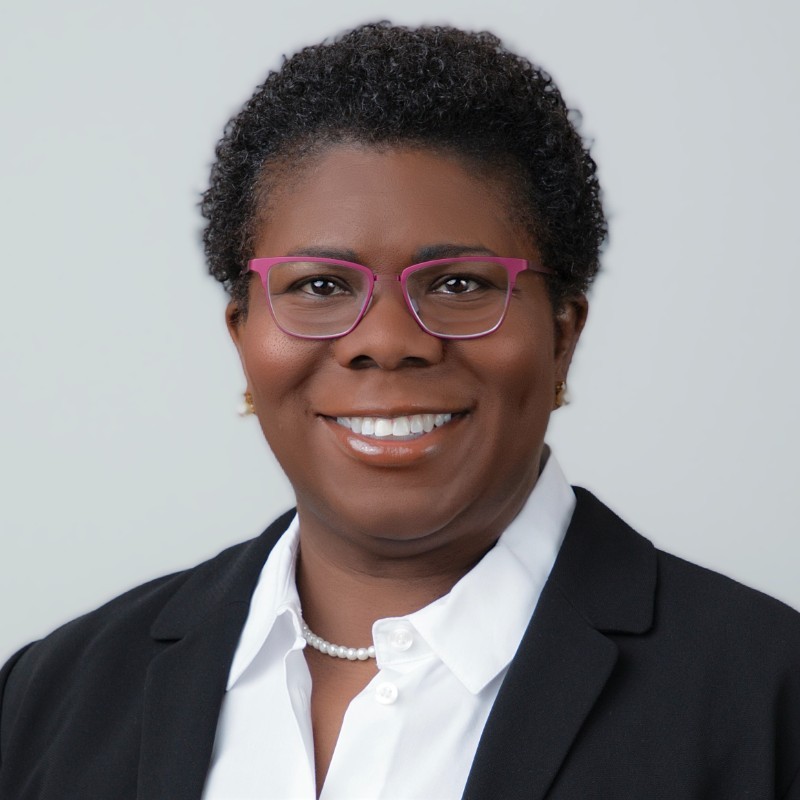
Meet Tracey Knight, principal at Real Treasury. She has spent 30 years in corporate treasury and is now helping companies navigate the AI revolution that's reshaping how businesses manage and move their money.
Right from the time that you need a formal treasury department, it is a great time to invest in technology that goes along with that. So as you grow and become more complex, you've already got the structure in place to manage it and manage it well.
Where do you see the big applications of AI in corporate treasury? What would you advise to look into first? What do you see as the most promising?
The focus should be: where do we have problems?
Tracey, welcome to the show. You have spent close to 30 years in and around corporate treasury. Can you take us back to the start? What got you into treasury in the first place?
Well, like most people, I stumbled across treasury. Out of college, I went to work for a large global company. It was Southwestern Bell Telephone, one of the Baby Bells after AT&T was broken up. I was working in a variety of different finance jobs, including remittance operations, which was an internal lockbox — pretty much as big as a bank lockbox, because we literally had millions of customers. And I would have to report in to treasury how much we were depositing or how much we were collecting from our clients. I got more and more curious about the people I would talk to on a daily basis. Over the years, I was fortunate enough that one day my manager asked me what I thought I was interested in next. And I said, "Maybe one of those corporate jobs in treasury." And he said, "Well, you should wait on that. Wait on the thing that really interests you. Don't just go seeking a new job for a promotion." And after I said that, it was less than two months before a job came up on the job board for one in treasury. I got that job and have loved it ever since.
Oh, that's interesting that you mention that — especially that the people side got you into treasury, talking to the people who worked there, and that got your attention. That seems to be a recurring topic in this podcast: we speak to people who are really good at working with people. When I look at your career, you've worked as a treasury practitioner, you worked on the technology side of treasury, and now you are also an independent consultant. How did each of these roles affect how you look at treasury in a different way?
I think it gives me a pretty unique perspective, having done the job itself. I'm very much in tune with the fact that everything I do and say as a consultant — or even when I was on the vendor side — impacts people's real jobs, their day-to-day. As a treasury practitioner, I loved the technology. We had an old TMS called ICMS, which eventually became SunGard, which eventually became FIS. And we had modems — not everybody even knows what a modem is anymore — but I was into every part of it, learning how to write the scripts and the reports and all those things. It sparked a love that I didn't know I had for technology. But I think the combination of starting there made the difference in the rest of my career, because I always kept in mind that we were impacting people's real jobs, what they needed to do every day. So when I was on the vendor side, we shouldn't have taken their use of the technology we made lightly. When they called and they had a problem, or the system maybe was down, or the information from some banks didn't come through to them, this was critical, and we shouldn't take it lightly. This is what they needed, literally, to do their jobs. So that is always in my mind, and I find that I tend to be a little more — I guess you'd call it client-centered — because of it. I've been the client.
Yeah, it's quite interesting that you mention that quite early on you were already most interested in the technology side of things. You talked about modems — did the technology already make a difference back then? Or was it more something like, well, this is so basic that it doesn't really make a difference, and maybe we're better off just doing it with pen and paper? Or could you already tell in the beginning, okay, this is where the world is going to move towards, that we all work on computers and do things in a digital way? How do you see that evolution happening over time?
Okay, I didn't hide all my gray today, and I see I'm going to show my gray through the words that I say as well. It really wasn't that long ago. Technology has been changing fast, but the impact it makes — the impact automation makes on your job — has been there right from the very beginning. At the time I started in treasury, which was in the '90s, even though we had modems, we did of course have a PC, but I did not have a laptop at home. When I went to college, I remember taking a typewriter with me. So things have changed fast. But the impact it made on our daily jobs was tremendous. We were already using it to gather bank data from every bank that could provide it. There were plenty that couldn't. I still remember the people I called several times a week at some smaller bank — say, First National Bank in Sweetwater, Texas, some little town. I would call, and maybe it would be Betty. I would know everybody's name at the bank on the other end. I would call and say, "Hey, this is Tracey from Southwestern Bell calling to get my balances." And I would have to say that even though she knew my voice and I knew hers, because we did this literally several times a week. But the impact the technology had on the job was that it really made the job more interesting. We spent less time just calling banks and doing those things on the phone. It started our cash positions for us. It helped us with all the drawdowns and the fundings of the various accounts. We had many, many accounts as a utility. We had clients in small towns all over what started as a five-state area for us — and eventually Southwestern Bell grew back into SBC Communications and became AT&T again, so a truly global organization — where we were able to spend our time, as new entrants into treasury, learning all the different areas. I was able to touch investments and debt; we were issuers of CP every day and did foreign exchange transactions to pay employees who were overseas and pay a variety of different bills for them. I started to learn about the different kinds of transactions and instruments that could be used, and eventually studied for the CTP and got more of the theory behind it. So not being caught doing the daily — what I'm going to call boring — part of the job gave us more time to explore, ask questions, and learn more about all of what treasury entailed. Even though there were quite a number of us, we got a chance to back each other up and talk to people who were more expert in certain areas. So over the years there, I learned so much, and studying for the CTP filled in the — I'll call it technical — knowledge that I didn't have, about why a forward was more than just buying spot and holding it for a little while. You started to learn the nuances of all the different instruments and things you came across.
Yeah. So if I listen to you, some of the basic things still haven't changed even if the technology is there. As a treasurer, you still want to understand the reason you're doing certain things, even though the technology helps you — okay, these are all the elements that belong to a forward, but at the end of the day you still need to understand the concepts behind it. Are there other things you have seen that are still basically the same? Even though we might now get our data from a bank through API or host-to-host, I think even today some banks cannot automatically deliver this data. When I was in treasury, six or seven years ago, I still needed to phone some banks as well to say, hey, this data is missing, can you deliver it? Do you see other things which have not changed if we look back 10 years?
Yeah, there's so much that has not changed. You say 10 years, but I mean 20 years and 30 years too. So many companies — not so much the very large enterprise companies, but as you come down in size — still have not invested in what I think are pretty basic forms of technology. There is no job you go to where you don't expect them to provide your laptop, and for that laptop to have some kind of software available, whether it's over the web and you're using Google products, or Microsoft products installed or maybe available through your browser. No matter what, you expect it. It's just a standard. But yet it is not a standard across treasuries everywhere that you have these basic tools in place. So many companies are still operating on spreadsheets in a very manual fashion. Now, that's starting to change with the new advances — basically anyone being able to code in some way. Smaller companies that for whatever reason never felt like they could invest a little bit in technology, even though price points have come way down, are starting to explore the value of automation, even if they're doing it themselves. That doesn't mean it's being done the right way or a safe way, but they're exploring it. And I think this is a groundbreaking time that we're living in, because regular people, everyday people, are becoming a little bit more technical — not afraid of it anymore, to where you'd say that's something techies do. Now it's something you can do as a regular person, regardless of whether or not you have any kind of technical background. And it's exciting. I think we're at an inflection point in time that's very much like when the iPhone came on the scene. Prior to iPhones, we all had our BlackBerrys, and we were excited. We loved our BlackBerrys, and it was a company that was growing at such a tremendous rate and doing global business. It was great. And then something new came along that literally changed everything. And we're right there now. We don't even quite understand the scope of what AI is going to bring, but we know that, harnessed properly, used properly, it's going to be groundbreaking. And I think we're right there. I don't know who the winners will be, though.
Let's go back a little bit before vibe coding — let's say two years ago. If you look at the typical companies in the US, you mentioned there's still a lot of manual work taking place where you could consider investing in automation. Where do you typically see that business case starting to grow for companies — investing in a proper tool, maybe buying a solution or building your own? I know the cost of building software is coming way down, but suppose you don't want to do it yourself. Where do you typically see the business case?
Treasury grows out of the finance department, and so at the earliest, it happens when companies are what I call pre-treasury: there are operations happening on a couple of different desks, where someone is gathering that cash information and reporting on it, but there's no formal treasury department. That is usually around 500 to 700 million in revenue — although I really hate talking about treasury by revenue, because you can be very complex even when you're still small, and very simple even when you're large. So it really depends on the business. But as companies grow to where there are multiple entities that own bank accounts, multiple bank accounts across different banks, and sometimes when you're starting to deal with different currencies — those are the things that begin to add complexity. And as soon as complexity enters the picture, technology should come along with it, because that complexity starts to eat into people's time, where their time is spent less on thinking and more on repetitive behaviors. So I think almost any company can benefit from technology, and the price points have come down such that even smaller companies can, really from 50 million or so on up — but certainly by the time you're in that $300 to $400 million range, as long as you've started to diversify just a little bit, which you should no matter what, and not keep all of your counterparty risk with just one bank. We've had the failures that should remind everybody that's not a good idea. So as you begin to utilize different banks, more entities, more currencies, more instruments, and more draws on your revolver and things at your bank, all those things add complexity. You can automate the — I'm going to call it boring — parts of it, so that people can spend time thinking about what should be done differently as you begin to automate. So many processes are set up for manual environments. You have all those checks in place because you're doing things in a manual way. So when you eliminate those manual processes, you also need to eliminate a lot of the other things that came along with being manual. You were doing those checks to catch all the mistakes that were being made. So when you eliminate the mistakes, you can eliminate some of the checks and extra things you were doing along with them. I think every company should be thinking about where they should start to automate, however they choose to do it, and price points are such that mid-market companies can definitely do it now.
Yeah. Would you say you see in the market that a lot of companies are starting to do this too late — that the complexity has grown too much over time, and at some point they can no longer ignore the situation, because the treasury activities have become too complex to manage manually? Would you advise them to look into this earlier?
If you can, I think it is ideal to put the structure of your treasury in place, including technology, right from the moment you decide you need treasury — right from the time that you need a formal treasury department. It is a great time to invest in technology that goes along with that. So as you grow and become more complex, you've already got the structure in place to manage it and manage it well. You don't have to wait for a failure, until it is too late, so to speak, to invest. Why not get out in front of it and get ahead? I always think about it this way: technology and the advances it can bring give you more time to think. And if you have more time to think, then you ought to be able to do some things better. You look at things differently when you can see the whole picture. And that's part of what modern technology is bringing — easier reporting than it ever was for me when I was doing it with Crystal Reports in the '90s. It's easier than that now. So you can have visibility. And that visibility into your cash should bring about thoughts like: why do we have cash over there that we're not utilizing? Maybe we could set up better intercompany loan arrangements. Maybe we could do any number of different things when you have a chance to think about what you're doing, not just do it. Does that resonate with you? Is that what you've been seeing, too?
For sure. I remember those Crystal Reports — the first TMS I worked in had those as well. To be honest, I never got them properly working, so it was a nightmare to set up. But it's funny that you bring these up. You mentioned the thinking part — do you see a role for AI here? In the average corporate treasury team there are so many data points that it will be hard, if you don't set things up in a very structured way, to spot all of these opportunities: okay, you might have an opportunity here to invest some excess cash, you might have an opportunity to do an internal loan or even set up an in-house bank structure. What role do you see AI playing here over the coming years?
I see AI as an extension of automation. The bottom line is we've already automated a lot of different things — that doesn't mean they were all perfect. But the automation around gathering bank data — balance and transaction reporting — has been around for a long time. The method by which we do it has continued to improve, but the core operation already existed. Same thing when it comes to moving money around, or managing your in-house bank, or calculating and creating reports. All these things have already existed, but we're able to do them faster and easier and better as the technology continues to improve. What AI is bringing is more. I'd say the automation part is the very base level of what it's bringing. But now it's bringing the intelligence, potentially, when done right — because sometimes you get pretty stupid results, so when I say intelligence, I mean that loosely. If done properly, it brings the intelligence of knowing more. It's like you've got two or three other people next to you, all with more knowledge than you have. So if you're a specialist in one particular area, AI can be that assistant who knows about the things that you don't know and can bring more information to you to help you make better decisions. When utilized for more than just automation — which I see as the first step; you always try first to automate the repetitive, boring part out — you go beyond that to: okay, now how can it bring more information than I could ever gather together myself? Use AI to help you see what you can't see with your own small, short-functioning brain and eyes. Where you can look at a spreadsheet and maybe pick out an error, AI is able to look through millions and trillions of data points quickly and point out errors and correlations, and show things and present things to you. But it still requires you, the person, to say: is this relevant? It might be saying: did you notice this pattern, notice this repetitive transaction, notice something that is an anomaly in the data? But the AI doesn't know if that's good or bad. That's for the person to decide: is this relevant to my company or not? Is this an actual error, or is this expected? So AI, when harnessed properly, can be a force multiplier of what we're able to do.
Yeah, I agree with you there. And I also think that AI has the potential of onboarding the next tens of thousands, if not hundreds of thousands, of companies into these kinds of treasury tools. That's a bit what I expect, because when I first started to work in corporate treasury, I basically needed one or even two years — and I'm quite tech-savvy — to fully understand and grasp the complexity of the system: what are the different things to take into account, how does it all fit together, how can I get the maximum out of this system? I think with AI we have the potential of the AI helping you to connect your data sources and then also trying to make sense of that data. We still have a long way to go to have the harness in place in the correct way. But how do you foresee that? Do you think it can eventually also help to get more and more companies involved, because we can work on making it simpler — not having to spend, I don't know, $100,000 to hire a consultant for a few months to set up the system, and then you still don't know how to use it? Do you also think AI can help there, or are we too far off from that, and is it too complex?
No, I think we're already seeing that AI embedded in a tool can add value. It used to be that you would always need a technical person to handle the technical parts. That might be an integration: if you want a new integration with your ERP, because something has changed or a new system has come online, you were looking to the vendor to do it, or to your internal technical staff or someone else. Now you can ask AI to write it for you instead: write this API to connect to this system. When you provide it all the information it needs, it can do so much for you. And that opens up the possibility of connecting with almost any new data source. And the more data sources you have, the more information it has, and the more you can start to form those correlations. When I think about forecasting, for example: the more data you have, so that you have sources to predict what is going to happen in cash, the better your forecast can get. But traditionally, that's been more data than anybody could handle in their spreadsheets. They would try — and I've seen some pretty sophisticated ones over the years, where they've literally run out of rows in Excel, or run out of tabs and had to link to a new workbook. I've seen some amazingly complicated ones before, and it was always the data that was the holdup. It was the most difficult part of doing the forecast, and I think a whole new world is available to us — to regular people. You don't need the techie. But at the same time, I want to stress that while you can, as a regular person, play around and do a lot of things, there should be an element of governance, of controls, of understanding data and data sources, and of understanding what you're making available to whom and where and how. We have to be careful, because even as legitimate people are moving forward with these things, so are bad actors, and they're often moving at a rate faster than we are. So there have to be controls in place. I think there's a line that companies need to discuss, wherever they are.
Yeah. So you're basically saying we can build more and more — even treasurers themselves can fire up Claude Code or Codex or another AI agent and build a piece of automation. How do we control those risks? A treasurer is going to build something, Claude is going to program it, and it runs — it looks really nice, very fancy graphs, a nice dashboard. How do we control that, when he or she cannot inspect the code to make sure there are no mistakes in the data — and as a result the treasurer makes a disastrous decision based on a wrong piece of software or a bug in the code?
I think that's the downside of the buy-versus-build argument. It is great to utilize these new tools to explore what is possible, but in an area like treasury — where the data is used in real ways, to move real money, to fund real accounts, and impacts the corporate books of what's being reported, from a regulatory perspective as well — that accuracy and confidence is key to really utilizing whatever it is that we build. We have to have that governance and confidence. And so when a company is maybe just getting started, or too small and feels like they don't have the budget for any kind of established software from a vendor, then maybe they do their first iteration playing around themselves and build something. But I think as soon as you can afford something from a vendor who specializes in just the tool that you need, it's probably worth it for most companies to invest in a standardized product, so that the code is just that: it's standard, it's maintained. I always liken it to spreadsheets. When you move into a new job and you acquire a spreadsheet that was developed by somebody else and was pretty complicated, you play around with it, but you're never really confident in it. And so you end up rewriting it — you start over and you build your own. And I wouldn't be surprised if that is how companies feel when they utilize some of these smaller tools — I'll even call it a TMS, since people do call what they build themselves a TMS. When the main person who built it leaves, will the company still be able to change and adapt and grow with that product, or do they start over every time? What a waste of time that is, to have to start over again and again and again with something that you may not fully trust. And I think that is the argument still to be made for buying. And then maybe what you do is still build a little bit to fill gaps. So you have a core system that is owned and managed by someone else, who is investing in it regularly, upgrading it regularly, and adding new functionality. But when there are gaps — and there always are gaps, because every company really is unique; even though we tell ourselves treasury is just treasury, there's something unique about everyone — you fill those gaps maybe with things that you can do yourself. That's where I am right now. I would imagine that if you ask me again in two years, my opinion might change and grow as I see more examples of what's possible.
Yeah, I fully agree with you. I think the jury is out on whether people can at some point vibe code their own TMS or whatever kind of system they need in their business. I do think, as a consequence of this whole vibe coding movement, we have seen that at least the cost of building software has gone down tremendously — or the productivity has gone up; it's how you look at it. Do you see these benefits being passed on? Because you know a lot of treasury software vendors — do you already see these cost savings or productivity gains being passed on to the end user? I know there's probably a lag in that, but I can also imagine you're seeing more and more companies or startups arriving on the scene — new kids on the block — trying to offer a solution which is more competitive when it comes to pricing but also newer technology. Do you already notice that when looking at the broader market?
So, do I see prices coming down — that was the first part of your question. Overall, I would say with existing products, not so much. Even though they probably are able to do more with less now, I don't see that necessarily translating into the prices that new clients are getting with those existing products. Many of them are of course investing heavily in their products. I think the products all across the market are growing right now, and so it's not that they are somehow returning those excess profits to clients. They are instead reinvesting more in their products, especially around AI and forecasting. Those are the big areas right now. What has changed is the influx of new technology into the marketplace, and it's been tremendous. The number of new names on our chart has grown. There are products we see coming up that will soon be on the chart. They're moving segments as they continue to add more functionality, and that has definitely put some pressure on the marketplace when it comes to what I'm going to call the basics of technology. The basics for treasury are still just cash visibility, cash forecasting, and basic everyday cash positioning. Those are the core of almost any system. And the price point for that definitely has come down. But I would say it's come down for simple treasuries, not necessarily for complex treasuries. The new products cater more toward a simpler treasury — one that just doesn't have a huge complexity of entities and, of course, of financial instruments and all that. When you look at just that core functionality, the price point has come down tremendously. But it's because of all the new players in the market who are designing with these new tools and fully utilizing AWS services and all of the new technology that's come along.
Yeah, I think when you look at the stock market over the past few months, we've seen SaaS platforms' and software providers' stock prices in big decline. Some examples include Salesforce — although in the past week it has recovered a little bit, making up some ground — but I think it's an indication that at least investors seem to think the business model for SaaS software providers is no longer a very sustainable one. How do you look at this for treasury vendors? Is it a sustainable business, or in five years will we all build our own TMSs?
I don't think we'll ever all build our own tools around core areas that require that governance and that the whole company is depending upon. The reason certain types of products can be easily replaced is that anybody can think through them and build them, and if something breaks or goes wrong, it's not going to kill us. We've got time to fix it, and the world doesn't blow up. But when people don't get paid — when you expect your payroll on the 15th and the 31st of every month and it's not there — the world is blowing up from the corporate perspective. And so there are key functionalities that I don't think you can depend on Joe sitting next to you to do properly and stake your company's reputation on. When you miss a bond payment, or something goes wrong in treasury and in finance in general, those are major things that we don't just depend on the guy sitting next to us to cover. So for treasury, I don't ever see every company building its own. That seems like a waste of time and effort. Where our effort belongs is in our core functional area: how do we do treasury better? How can we improve and add more value to our company? And that's not best spent coding. It's spent thinking about our cash and our investments and our debt and how we can add more value to our company. And that's not by being a coder.
Yeah. So if a finance manager at a company with 100 million revenue comes to you and asks, "Hey Tracey, our treasury activities are getting a little bit complicated and it's taking me quite some time" — what's the first question you would ask them to determine whether they need to buy a solution or build something themselves?
Do they have any budget at all? And that would be it, because I really don't believe they should be building something themselves. I would ask questions around their complexity to point them to the right kind of product, but I would always say you start there if you have any kind of budget at all. That's where you start, and building is for, like I said, filling gaps. Now, if they said they had no budget, then I would say: yep, the first thing you want to do is at least get some cash visibility. So connect to your banks, and build a tool to help you at least pull down that information from your banks automatically every day. That would be a great place to start.
And suppose you want to buy something. You say, well, I don't want to do this myself, because so many things can go wrong. So you have some budget, you want to buy something, but there are so many vendors to choose from. How do you help companies select the right vendor for their problem? Because how do I determine what I need? I can know my requirements, but how do I know which company would best help me in getting this automated and visible?
At Real Treasury, we've segmented the market into three segments — Cash Tools, TMS-Lite, and TRMS-Lite — so that treasury teams are able to see these bucketed. Now, that doesn't mean they're perfect buckets. There's a uniqueness to every different vendor, and that's a hard thing to show on a chart, but it does help point you in the right direction. So if you need just those basics — just the cash visibility and the forecasting — then Cash Tools is often the right place to be, particularly if you're a simpler customer. When we talk to someone new, the first thing we do is start with discovery, just asking and understanding what their requirements are so that we can point them to the right segment. And then if it's a company that really wants to explore the market themselves, we're helping them at least narrow it down — from the 30 or so products on the chart in North America, and in Europe the number of products is even greater than that — to a smaller segment, so they can really start to dig deep into those particular companies. So knowing how to narrow it down to your focus, to your requirements, is the key to getting off to a good start — and not just depending on the names that you already know. As I said, there are so many new entrants in the marketplace, and they're good options for many, many companies, so to write them off just because they are new is definitely a mistake.
All right. And can you walk us through how a company should approach such a selection process? If there's a narrowed-down list — okay, these are the potential solution providers — how do you approach that? Do you just contact them and ask them for a demo?
You can actually get started that way. But what I think companies should do first is write down their goals and what they need. There's something to be said for writing something down so that you keep it in front of you. People say the same thing even if your goal is to save more money or to lose weight: you should write it down. It's very much the same for a treasury team. They need to write down their requirements so that they keep them front and center as they go through the process. Then, ideally, they look at our chart to get a sense of all the products that are available within the areas they need, and then start to reach out to those companies with their requirements in mind, saying: this is what we are trying to do. Do you have a solution that helps with that? And if they say yes, then get that short introductory demo. From those short introductory demos, you can get a sense of what you like and don't like, as well as even open your mind up to some things that maybe you didn't think about before — some requirements that you didn't have written down but that you realize do in fact apply to you, some functionality that you didn't even know was possible. So it's important in that first phase to learn more about what is possible in the marketplace, always with your core requirements in mind. Once you've done that, you can narrow it down to the ones that match up well to your requirements, and start to ask some key questions about where they are, their support, their way of doing business, and how they handle their clients. At the same time, we recommend writing a demo script so you can now have an apples-to-apples demo. In that first introductory demo that companies get from vendors, it's the vendors driving the demo, and they of course are showing their product in its very best light. Of course, that's what they should do. But you're only seeing the best of the best, and every best thing they have is not necessarily something that you need as a company. That's why you have those requirements in front of you. So then you write a demo script where you're saying: I am interested in these key areas, and these are the key things that I want to see. Not just what you've already prepared in advance — show me the key areas that I know I'm going to need to work in over and over again. Have them show you the setup related to an area. What does it take to add a new entity, to add a new bank, to add some new bank accounts, to write some new rules — all the things that you'll have to do from time to time? See what it takes to set those up and what the workflow is like. If you're able to do it in person, maybe even do something where you put your hands on it a little bit and enter a financial instrument yourself. You already know what's required with a piece of debt: the start date, the settlement date, the maturity date, the rate. There are some key things that happen no matter what — you know what's required. So put your hands on it if you can, and touch it and see how it feels. When you do those things, you get a much better sense of how one product compares to another. That apples-to-apples comparison is the thing that makes the difference — and unfortunately, not enough companies insist on it. By not getting an apples-to-apples demo focused on the things that matter most, companies end up picking based on things that don't matter, just because it looked good. Everything looks good. Vendors spend a lot of time on the UX, but often it's about flash, and flash isn't what you need every day to get your job done. You need something that's giving you visibility, and a report that you can write and change yourself, without needing help from someone else.
Yeah. So not only focus on the happy flow — okay, show me what you got — but really flip the script, take ownership, and say: this is what I want to see. Don't give the lead to the person from the vendor giving the demo. I think that's a really good tip. I have talked to many companies in the past, and unfortunately I did not often encounter that type of ask from a company. Usually it is: okay, can you show me your platform? So I do subscribe to your advice that you should determine what you want to see — I think that's the only way to really test how flexible the system is and whether it can really support you. Because — do you still see a lot of cases where the vendor overpromises certain functionality?
I don't think it's about overpromising functionality. I think it's that the treasury team did not ask the right questions. Remember that for the person on the sales side and the person demoing the system — and I've personally been both, so I understand the vendor side as well — their job is to show the product in its very best light. So if you ask a question in written form, like an RFP, the answer is: yes, we can do that. Now, maybe they didn't write "yes, with a workaround," or "yes, with this companion product," or "yes, in a certain particular way, not quite the way you have in mind." They wrote yes, in writing. Once again, this is why you want the scripted demo, so that you can see it for yourself. What did it take? But it is incumbent on the client or the prospect to ask the difficult questions. And companies often just bypass that. They assume a lot. They assume it can do it: well, I've heard about them, I've known the name, and I know so-and-so at another company uses them. So they just assume it's going to work well for them, and they don't ask difficult questions. And that is the benefit that I — and companies like mine — provide: assisting companies in getting to the root of the strengths and weaknesses of the various products that are appropriate, so that they can make the right decision. It's not that there is any one great product that works wonderfully for every company. It's not that there's any product that does every single thing exactly the way you want — I think that's unreasonable to expect. Even Excel still has bugs. But if you understand what you're getting, you can eliminate those surprises, so that you don't implement and then say, "Well, I thought it was going to do this." You really want to get to all of that before you buy, before you sign. And so doing a carefully scripted demo can really make the difference. And asking the difficult questions — asking what happens when something doesn't work, or giving the vendor examples of those things that, as I'm going to say, have hair on them. Most of the products do a great job at plain vanilla. But if you have some debt that isn't plain vanilla, that's not simple — well, have the vendors show you that in a demo situation. Say: I want you to do it in front of me. Don't enter it ahead of time — I want you to enter it live during the demo, so that I can see what steps it really takes to manage that kind of hairy debt. Or, if it can't do it, they'll have to tell you: well, we can do it up to this point, but these things are going to require that you make some adjustments. And that's how you really get to the details that you wish you had known ahead of time. So I don't think it's about overselling from a vendor. I think the prospect didn't ask the difficult questions, and often glosses through the demo experience in a rush to buy something and get started.
Yeah. Okay. Those sound like some really good tips for companies on the lookout for treasury systems. Let's get back to AI a little bit. Within a company there are often, well, at least strategic considerations to invest in AI capabilities. I think we've seen that trickling down into a lot of treasury teams as well: just do something with AI. Sometimes the secondary question is: but what are we going to do, and how will it add value? So not considering building stuff yourself, because we touched upon that already — where do you see the big applications of AI in corporate treasury? If I'm on a treasury team and I get the question from my CFO — hey, you guys should do something with AI, I don't care what it is, just do something with AI so we can report that we're doing it and getting benefits out of it — what would you advise to look into first? What do you see as the most promising?
Well, I'll tell you, I hate that statement — "we should do something with AI" — because I think it puts the focus on the wrong thing. The focus should be: where do we have problems? Where do we need some improvements? Where are we lacking? And I think if you start there instead, then maybe AI is a tool that can help you solve whatever the problem is. But I believe that you ought to start with problems. However, a problem where we are definitely seeing AI help and make a difference is first and foremost forecasting. AI is able to help you connect more data sources, to look at more data and figure out more correlations and more anomalies, and to handle data at scale in a way that the human brain and eye cannot. Now, forecasting is tricky. It always has been. I remember giving presentations about forecasting and what systems could do even back in the early 2000s. So here we are, 20-odd years later, still talking about it. But I believe we are seeing some real advances. It's still difficult: companies that are more mature, more repetitive, are getting great results from AI, because it's able to look through history, look at some of the things that are coming, and predict them much better. For companies that are newer and still growing and changing in an irregular way — because who actually grows at the same pace all the time? — those are harder to predict, and I think if someone tells you they can, they're probably not telling you the truth. You might be able to get better, but will it be perfect? No — just by the nature of the business. But we definitely are seeing advances in forecasting, around things like rule building — things that used to take people a long, long time to do manually can be automated much better, and AI is able to assist more there. If you've got more data historically, it's able to do much more for you, build rules, and just assist a lot more. Where I think we're going with it — and what we're starting to see as some vendors go, I'm going to say, all in on AI — is that they're pushing the envelope on what you can expect your system to be able to do. And I say it that way because, having done a cash position and everything manually in the past — we even used to actually have a 10-key calculator on our desk back in the '90s — I'm not sure I totally trust yet a system that does it all in the background. But I tend to be what I call a pessimistic optimist: I start off a little pessimistic, but then I come around and figure out, okay, how can we make this work? And I think I might still be slightly in my pessimism phase of not trusting vendors to do my cash position and all of that. I know it can do the calculations, but I want to see more — that's where I think I am right now. I don't want that black-box feeling. I don't want too many things done in the background where I am unable to apply my experience and reason and knowledge to it confidently. I think over time, vendors — particularly those that really are listening to their clients, so that they understand what the client is really trying to do — will get to where there is a big part of daily treasury functions that a person won't need to be involved in, until we get to the part where maybe we send out the money. And even then, there are some things that are just known. If you've got a debt that is maturing and it's time to repay, well, the amount is known — it's already known in advance. And so if there's a way to have the system check against what's already known and needs to go out, then why not let the system just do it on your behalf? So I see where we should be going. I just tend to be a little bit pessimistic about trusting new vendors to fully understand what I do. I'm saying this slowly because I'm trying to be careful as I speak, but I believe we're going in the right direction.
Tracey, I would like to challenge you a little bit there.
Okay.
I've seen many demos of treasury solutions, and the same level of pressure that companies sometimes face from the board to do something with AI — I've also seen that at different vendors. They've heard: okay, we should have something with AI, we should offer some kind of value, our platform should be AI-powered, or whatever. And then I see a demo, and the thing it can do is answer a simple question about your data — or even worse, it can answer a question about how the system works; it's a chatbot with some knowledge of how the system works, and you can ask it questions. I think the world, if we look outside of treasury, is moving more and more towards agentic AI, and what I'm seeing in the current vendors — and I'm also curious to hear from you — is that they're struggling to get their legacy code, if I may say so, hooked up into an agentic AI engine which can really automate certain tasks to some degree. So as a result, I think — contrary to what you're saying — a new player might start fresh, might have fewer of those constraints, and it can sometimes even be an advantage that you don't have so many live clients on it yet, because you can build faster, ship faster, and use the full extent of what is possible with agentic AI today. But that's taking a bit of a contrarian view on what you're saying. I'm curious to hear your perspective, because I know you have probably seen more demos than me.
I wouldn't really say that's contrarian. What I mean is, when I say do I trust vendors to fully understand what I'm doing as treasury personnel: there are so many new products out there, and some are really understanding treasury and showing that understanding in their product, and some are showing that they're great at technology but not necessarily at treasury. And so I think it's important that companies really make sure — that's the whole point behind the scripted demos and things like that — that a product can do what you need it to do. So it's not against new vendors. I'm not speaking against them. I love the new technology and where we're going, and I definitely see how those that are truly cloud-native through and through — not just in words but in deed — show how that makes the difference in what they're able to do. They're able to do more than just throw a chatbot on it. And even what we're calling the legacy players — there's no good word for that, which vendors love — are investing in their products too, and they have a suite of functionality that many companies need. So they're not going away immediately, though I think there are new products coming up that will eventually displace them. It's my view on the marketplace that the names many of us know will be like Blockbuster: you ask a kid today what Blockbuster is, and they don't know. Yet people my age were there several times a week, so we all knew what Blockbuster was. And I think that time is likely coming, just as it is for Salesforce and some of the other companies you mentioned. It's going to happen in treasury too, but it takes time. And maybe that time is happening — things are changing faster than ever before, so what that time period is, I don't know. But I believe there is a need in the marketplace right now for both the new and — I hate to say old, I'll call it legacy, but whatever you call it — those names that a lot of people know. If you are a complex treasury, you don't have lots of options. Those vendors have years of experience embedded in their products, and it works. At the same time, what the newer vendors are doing is very innovative, and it's pushing what is possible for companies of all sizes to be able to do.
All right.
But some of them don't necessarily match the needs of a complex treasury. Did I say that tactfully enough?
Yeah. No, I agree with you, and it remains to be seen how this is going to play out, but it's an interesting development and also a very interesting point in time to be in, when all of this is happening around us. I think that brings us to another innovation which might be relevant for treasury — or maybe not, I don't know. Especially in the US: I think the Trump administration at the moment is quite supportive of stablecoins. We see a lot of different things happening in the stablecoin world — we have legislation, we have some fintechs and even banks experimenting with it, and we have Circle being a listed company now, doing quite well since their IPO. How do you view the whole stablecoin development? Do you think at some point corporates — and mainly corporate treasury teams — will need to find out how to deal with stablecoins, how to manage them, how to manage the risks surrounding them? Or is it a little bit of hype as far as you're concerned?
Right now, I would say more hype than not. There do seem to be some real use cases, but I have mostly only heard about some intercompany, cross-border payments — and sometimes when companies have a deal closing, or something happens once a year where you've got to move money through all these different entities for tax purposes, things like that, where you're able to do it faster with a plan using stablecoins. But for the most part, I don't know that I've heard a ton of compelling use cases that apply to most corporates yet. And I still think we start with problems, and then we come up with solutions to those problems. I'm not a big fan of buying the shoes and then trying to find the dress to match the shoes. I like to find the dress and then find some shoes to match the dress. And I think of it the same way: we have problems, and then we find solutions to those problems. Sometimes when the solution comes before the problem, we're forcing it. And I see that a little bit with stablecoins. I want there to be some clear use cases, some clear problems that we solve with it. And I think when those are made plain, the companies that have those problems will step up and start to use them. But you can't force it down the wrong channels. If it doesn't apply, it doesn't apply. So you've got to be able to provide a use case. A couple of years ago, all the talk was around real-time payments and RTP. For those companies that have a real use case for it, they're using it, loving it, and getting tremendous value. Does it apply to every corporate out there? Nope. And there's no reason they should invest their time in it when they don't have a use case from which they'll get value. And I think the same way about stablecoins. So as we learn more — I think the other thing is that treasurers are willing to be strategic, but are by nature a bit risk-averse as well. And I don't like to say that in such a negative way. I shouldn't say risk-averse; let's call it risk-sensitive, or risk-careful — just making sure that they're aware of risks before they take them, so that they take them in controlled circumstances. And so the knowledge level of most people in treasury is not up to speed yet to take advantage of stablecoins. I think we're all still learning, and that's why there's so much talk of it at conferences and other places. Treasury teams need to be learning and need to understand it, so that they'll know if they have use cases to which they can apply it.
Yeah, I do recognize what you're saying. There's a lot of talk — if you go on LinkedIn, everyone is talking about stablecoins and AI. Of course, I know there's a lot of curiosity in different teams. We've also talked ourselves to a few treasury teams that want to know more about what the benefits of doing this actually are. And I think it makes sense to also explore it from a strategic perspective. I've seen some predictions that the amount of stablecoin payments as a percentage of global cross-border payment volume is going to go up over time. It remains to be seen if that will actually happen. But in those scenarios, I can understand if you're already exploring a bit: okay, what would it mean for me as a company? How do I receive payments? How do I manage the counterparty risk on those payments? But I do think the world is going to be increasingly digitized, and I think the advantage of stablecoins could be that they feel like the natural payment method for agents and all of that. At some point, who knows, maybe in a few years we have our personal shopping agents, who even have their own wallets. So it's food for thought, but it remains to be seen how practical this is all going to be.
Now, remember that you're talking to someone in Dallas, Texas, in the US. So when you say payments are going to continue to become more and more digitized, I smile, because here in the US we still use a ton of paper checks. Not on a personal level — most of us as regular people in our daily lives are using our digital wallets and doing things with our phones and all that — but from a business perspective, checks are still very pervasive here. So you're speaking to someone who's a laggard in payments to begin with, when it comes to the US and the US economy from that perspective, and US treasury departments from that perspective. Which isn't to say that there aren't forward-thinking companies and that there won't be adoption, but here in the US there are some core differences, and payments is one of those areas.
Yeah, that's interesting that you mention that. You work a lot with checks — in Europe, we know that you're using them, but we don't really know how to handle them
exactly
— speaking for myself.
I think another difference I can think of is that, for us, FX is more common — I think you have the luxury of paying more in US dollars, at least on average. What are some of the other core differences when running a corporate treasury if you're located in the US versus Europe?
Yeah, you've hit on it. I think one of the biggest ones is definitely around FX. Even though many US companies are of course global companies and have to deal with worldwide business and currencies, in Europe there are so many countries so close together that it is core to your operations almost from day one. It's rare that you're literally just dealing in your own currency as your business grows. And that is not necessarily the case here. So I think the level of sophistication — and I'll call it just normalization — of dealing with FX risk is probably greater in Europe, even in much smaller companies. Midsize companies in the US can run a good business without ever dealing with anything outside of USD, except maybe in some of their supplier contracts or maybe where they sell — and even then, a lot of them avoid FX risk just by doing everything in USD and pushing that risk onto the other counterparty, so they avoid dealing with it. I would say that probably is one of the big differences. The other is the number of banks that we deal with here. It changes the way we even go about things like cash positioning, and how important intraday is here. Once again, we're still using checks a lot in business. And so the one thing I often see is that when new vendors start marketing to the US, the first thing they have to do is learn about US banking and the products that are used. Some of them are just very different from anything happening in the rest of the world, because we are, in a lot of ways, like I said, laggards when it comes to checks. And then also, I've seen that in Europe in particular, the governments seem more willing to put controls in place and not wait for bad things to happen — they seem to actually want to protect their companies and people better from some of the things that can go wrong. While here in the US, we promote business and capitalism and growth at the expense of the regular person a lot more, and wait for catastrophe first and fixes after that. And so I think those are the things that influence the business environment a lot.
Yeah, I really recognize that, and I think there are pros and cons to the European versus the US approach. You have many successful companies and big tech, of course, but also a thriving startup scene, because of what you're just describing. So I think there are pros and cons to both business environments. Tracey, let's bring the conversation back to where we started: the people side of treasury. As a young person wanting to start my career in treasury, what skills do you think are essential to sharpen if I'm a college graduate, or if I just finished school and want to start a job in treasury? What would you advise to focus on?
I don't know if it's different in Europe, but here in the States, very few people have even heard of treasury by the time they're getting out of school. It doesn't come up much in college, even in finance classes or anything like that. So as a result, many of us literally just stumble across treasury — but once we find it, we love it. To young people entering treasury, I would suggest that they first make sure they learn what I'll call the core tenets of treasury — what we're really here for, the purpose of it — but then start bringing those new ideas in. I think we've been stagnant for so long that as AI and possible new technologies come, it's going to be younger people who really push the envelope on what can be done. They've never known that manual world. They've never had the 10-key, never had a modem, and maybe aren't constrained by what we know — or what we think we know — or how we've always done it. Instead, they've seen how things have been done in other areas, or even in personal life, and are ready and able to apply that to business. So I would say that they need to stay curious. They need to make sure they understand the whys. And there are so many good ways that people can learn more about their business — and it is not by thinking that we are so siloed; getting out of the silo is how treasury can add the most value to its company. So if you manufacture something, visit a plant and see what they do there, and understand your company's core business. It's not moving money around in treasury — it's selling something, or making something, or servicing something. Understanding the core business is key for anybody, frankly, in any department, but particularly in treasury, where we are often not seen or heard, even though everybody benefits from the things that we do. So we have to stay close to the core business of the company, so that we can find new ways to add value to it.
Yeah, those are some nice words, Tracey. I would like to end this show with a tradition we have, which is called The One Thing. We always ask our guests to share, in one minute, your one thing — your piece of advice that a treasurer listening to this episode can act on that will have the most impact. And you're free to answer whatever you want.
I think the one thing that matters most is people. When I think about my career and the companies and teams I've been at, the one thing that stays with me is the people I've met, and how many of them I still stay in contact with. For the teams where I've been the manager or supervisor or director, or whatever the role — how I have impacted others by giving them key advice or encouragement, or helping them find new roles at new companies, whatever it might be — it just makes me smile to think about the people I've worked with over the years. So never forgetting that people are the drivers of what we do — I think the most important thing any leader can do, in any position, is to not forget that there are real people behind what we do. We're impacting people, so impact their lives in a positive way. Regardless of the business, we can impact people and make their lives better. And it makes our lives better, too.