
How Bad Financial Decisions and Poor Cash Management Are Destroying Businesses
In this episode
Read the conversation
We had the big bankruptcies because people didn't understand the balance sheet. They couldn't understand the P&L and how it corresponds to the balance sheet and liquidity. So many companies — big conglomerates and huge companies that nobody would guess would go bust — actually went. So this was a big lesson.
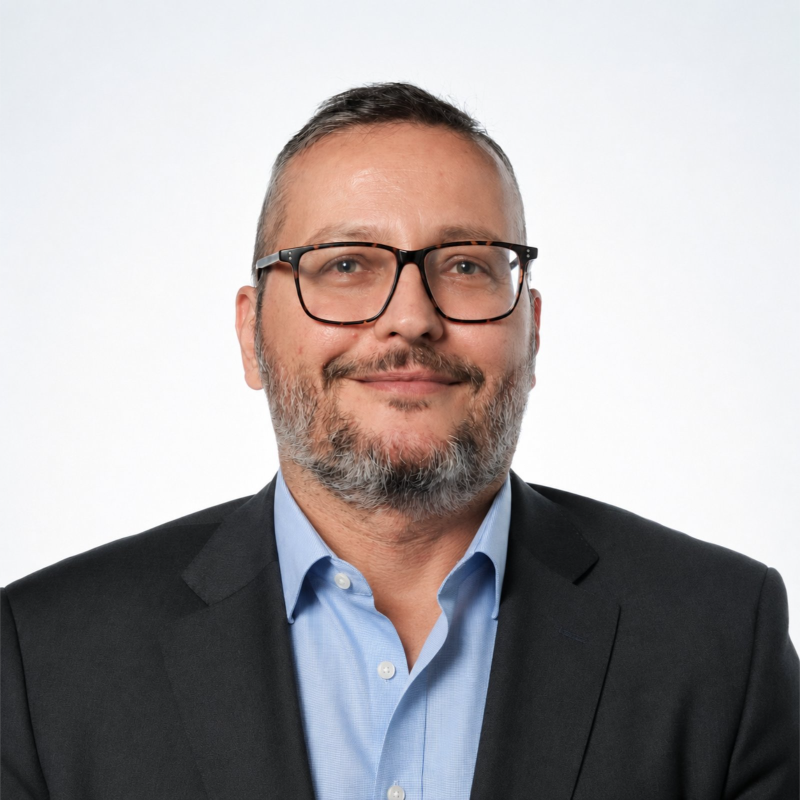
Nikos Polymenakos is the director of treasury at Delta Foods SA and former treasury and credit manager at Henkel. He specializes in treasury, capital structure, and digital finance transformation, helping organizations turn financial data into strategic decisions and finance teams into business partners.
AI is the end of a journey and not the start of a journey. Before simplifying, you have to have accurate data. Nobody can go to AI if he doesn't have the first layer, which is accurate data. Once everything is in place, you can put AI in to make quick and fast decisions, but without all the previous steps, it's like…
Niko, welcome to Treasury Leaders. Niko, can you tell us a little bit about your career? I think you did not start your career in finance — how did you end up in treasury?
Jan-Willem, thank you very much for the invitation. It's great to be here with you, and thanks for having me. Well, that's true. My career and my education are not linear, and this is how I ended up in treasury. But if you think retrospectively, it does make sense, because I started as a graphic designer. My aim was to be creative and do something outside of math and very structural things. Life ended up bringing me to a bank to work, and then everything revealed itself. But now, as I'm in my 25th year of experience in the finance world, more or less, I can assure you that this journey makes absolute sense, because finance is not about maths, as most people believe. It contains a lot of math, but it's about behavior. It's about relationships. It's about history. It's about understanding the world and how it operates. It's all about humans at the end of the day. So having a more humanitarian starting point absolutely makes sense after all these 25 years. But of course, it takes mathematics and understanding structural things to excel at this job.
Yeah, that's very interesting. So by nature you're quite a creative person. Can you find any of that creativity in your daily job as well?
Yes, as a matter of fact, yes. This is the motivation behind all this noise that you can create. First of all, you have to understand how business works, which is very creative, because humans are creative and they have created interesting things. So a business model is very creative, and so is how everything correlates with everything else. You have to get inside this and the mechanics, and then build on top of it. So yes, I find creative pieces all day, all around my area of responsibility.
Yeah, and I think one good example of that is how you really try to understand the business, because I think you're one of the few treasurers I know who, besides being the treasurer, is also finance manager for a few of the subsidiaries within Delta Foods. Can you tell us a little bit about that? How do you combine all of that in the few hours in the day you have?
Starting from this point: it has to be like this, because treasury is at the heart of the business — treasury is like legal, and treasurers have to understand everything. They have to understand the market and the customers. They have to understand value creation, and the elements that destroy value too. They have to understand the needs of the business. They have to understand many things. So being in finance is, in my head, another step in the career of a treasurer, because you are already there in the middle, you see things, and you understand how business works.
And how do you deal with that switching of context all the time? Because you have to wear many hats. One day you have to go into one of the subsidiaries and maybe do some finance tasks, and the other day you have to do the treasury work. How do you switch between those contexts on a day-to-day basis?
Well, if you start connecting the dots, it makes absolute sense, because you understand that cash connects the dots in the business. When you understand that, you are the connection in every aspect of the business. For example, in my business, in fast-moving consumer goods, through cash you can understand the business drivers and how customers respond. You can understand how the market responds. You can understand the needs of a new product. You can understand the opex and the capex. So it's a necessity to understand the business, and you know the result — you can translate a decision to the result very quickly. And as you add experience, it comes by itself that you understand the decisions and how they are reflected in the cash. Because the P&L is very important for a business, for valuation, for the stock market, but understanding the balance sheet and, virtually, the cash is what puts you into the next day. Because if you don't have cash, or you have trapped cash, or you have trapped liquidity in your balance sheet, you are doomed. You cannot take the opportunities you have, and in the worst case, maybe you go bankrupt just because you cannot understand your balance sheet. So yes, it's difficult, as we already said offline. It's very interesting. You have to be very disciplined to manage your time and change focus within the day between three or four different priorities. But in the end, this adds value not only to you as a professional, but to the company too, because you can understand the normal course of business — how business and profit transform into cash, which is very important in a business.
Yeah, I think that's a very good point. We have seen examples in the market where businesses were profitable, but they didn't manage their liquidity well, and as a result they went bankrupt anyhow. So I think having these two perspectives really helps you understand the full picture. So that's a good combination, I think.
Yeah. Since I also have responsibility for credit risk — third-party credit risk, not only financial credit risk — I've seen a lot of cases where companies couldn't handle growth, couldn't finance growth. And that's the worst case: if you don't grow, you have a problem, but if you grow and you don't have fuel in the middle of the journey, it's worse, because you are going to blow up in the air. So understanding the mechanics — what the balance is, what your financial needs are, how much you can grow — is very pivotal for treasury.
But also for the success of the business as a whole.
Yeah.
Niko, let's talk a little bit about Greece, because we have seen quite a remarkable growth story and an economic recovery over the past five years, and there even seems to be room for further improvement. What is it like running corporate treasury in Greece? Are there any specific things that you see in a Greek company? And I know you also worked for a German corporate. Where do you see the differences in the landscape you're dealing with?
Yeah, first of all, there are cultural differences in every aspect of life. So cultural differences exist in corporates too. Fundamentally, Southern European companies have a different mentality than Northern or Central European companies, which is normal, it's acceptable, and it's part of being in Europe. It is, eventually, a composition of different ways of doing business. For Greece specifically, things are more spontaneous. People move, they react rather than plan. This was the way of doing business for many, many years. But Greece had a big lesson through the official-sector bankruptcy in 2010. And this was a lesson that made doing business very hard. In 2015 we had the capital controls, which made business even harder. We had the big bankruptcies because, as I said before, people didn't understand the balance sheet. They couldn't understand the P&L and how it corresponds to the balance sheet and liquidity. So many companies — big conglomerates and huge companies that nobody would guess would go bust — actually went. So this was a big lesson. It was a very hard situation to experience — more than 10 years of a hard financial situation. But eventually it was a big lesson. You saw many, many mistakes, and how bad decisions could affect the business. And it gave you a sign that you have to be prepared for the unexpected, which is a major lesson for operating in Greece. You have to be prepared for the unexpected, because everybody gets prepared for the expected, but nobody can prepare for the totally unknown situation — something that goes crazy. But you always have to be a step ahead and be prepared for the unexpected. So you have to have secured, committed lines. You have to have optional working capital. You have to be profitable. You have to have a plan B, a plan C. This was a major lesson through all these years in Greece. And eventually, after all these lessons, corporates understood that they have to elevate some of the processes, like treasury. So treasury, I believe, nowadays has a pivotal role in business in Greece. And it also moves from the operational side to advisory. You can show them how much a business can expand with its own resources. You can estimate how much debt you can accumulate — what the ceiling of the debt is before it starts destroying value, or how this debt accumulation will change the risk profile of your company and what it will mean for the third parties. In all of this scenery, treasury has the star role nowadays, in my opinion, because it understands markets and also has a global view around the business.
Yeah, I think it's really interesting what you're saying. And it's more of a question: if you as a corporate treasury have secured a credit facility at your banks, can that also mean there are opportunities in the market? For example, businesses which have not invested in setting up a treasury, which might be profitable at their core but have some liquidity problems. I can also imagine that there might be some opportunities for doing M&A in that market.
Yes, yes, definitely. After 2015-2016, there was this big Eldorado in M&A in Greece. Major funds came in at the beginning — or at the end of the crisis, depending on where you see it from. Now they're harvesting the profits of that decision, and M&A activity is going to the second or third layer, meaning middle companies. As a company that was itself acquired in 2017, we also acquired three or four companies afterwards, smaller ones, to build a portfolio. So yes, definitely. And this sprint is still happening in Greece. Businesses are being consolidated, funds are buying traditional family companies, they transform them into a corporate, they make them more beautified, let's say, and they sell them to the next one. So this is also a big learning for professional Greece, because you learn how the market appreciates businesses, which is very fundamental — you see where a fund or a private equity finds value in your business. And if you turn it bottom-up, you drive your business more successfully and create more value through this.
Yeah. How is it working with Greek banks? Are they innovative? Are they there to facilitate the growth of your business, or do you need to look outside of Greece as well?
Well, unfortunately, during the crisis many of the foreign banks left the country due to country risk. And the Greek local banks became introverted. They had to digest a huge sum of bad debt and to recapitalize their equity capital. So there was a long introverted journey for them. They were very reluctant about new credit, and they focused only on managing the old, existing loans. Adding the 2015 capital controls on top, it was a mess. It was like we were cut off from time; we were in a different dimension. Nowadays, things are moving fast. COVID, surprisingly, gave a big benefit to Greek companies — corporates and banks — because we hurried up and became digital in a very fast way, out of necessity. Many things became digital during that couple of years of COVID, from the official sector to corporates and banking. And now that the country has been upgraded by the rating agencies, I see there's more appetite for global banks to come — in the beginning especially only for liquidity. They are offering investment products for the time being, but I think eventually they're going to get involved more in financing businesses and corporates, which is definitely going to be good for Greece.
So you see that coming back already?
Yeah, but in a very slow and cautious way. Which is understandable.
Yeah, but if you look at all the statistics and the data, it's now becoming quite an interesting market again.
Sure.
Now, you also set up a big trade finance program within Delta Foods. Can you tell us a little bit about the benefits of a trade finance program?
Sure. This is also another program that came from necessity, because when you have a lack of financing, you have to go to your balance sheet and find all the slow-moving components that you have to accelerate to create liquidity. So through these years, we went across all the items of the balance sheet, and we installed a few financial supply chain programs. Actually, to be frank, it takes two to tango, and the banking sector also saw this opportunity, because it was a kind of secured finance — secured against receivables, against inventory. It was easier for them to digest through their capital requirements, and it was better because this kind of secured financing was protecting the equity. Everybody was focused on this working capital finance. So yes, we made many working capital schemes, from confidential factoring, normal factoring, non-recourse factoring, and with-recourse factoring, and we made supplier finance. We activated many of the components that were dormant. But of course, as everybody knows, this is a very expensive way to get financing. So then you have to balance the cost and benefit. You have to be very focused on the cost. And actually, you have to actively manage these products — you cannot plug them in and let them roll. You have to manage it, stop it, start it, and always keep an eye on it: use it as a credit facility and not as a plug-in instrument that is always on.
Yeah.
So this is the main outcome of this journey so far.
All right. And you also led several big syndicated bond deals. Can you tell us a little bit about what exactly that is and how it helps your company?
Yeah, well, syndicated bond loans are actually a country-specific program. It's a syndicated bond that is not on the market — it's only private, so the banks are the buyers of this product. And it's actually a technical way to bypass a withholding tax — a flat fee, actually, of 0.15 from the government — which, in big sums, makes absolute sense to bypass. So this is the way to raise money in big sums in Greece, and usually nobody wants to take all the risk by themselves, so it's always syndicated. You actually have to follow the whole process of issuing a bond — make a program, put in covenants, and finance five-year plans, everything — but it's totally private, not going public in any way. This process is very challenging, especially in hard times, where nobody wants to finance and they are just obliged to refinance a loan. It's very technical, and it has a lot of legalities inside. There are covenants, so you have to be very careful, because a small detail can bind your business for the next 5 to 10 years, and it's difficult to alter, especially when it's syndicated. Besides that, it's very technical and legal, as I said, and there's a lot of legal involvement and financial planning, so it's also a very expensive process.
Yeah, so it's also quite tailored, it sounds, and it takes quite a long time to set it up specifically for your company.
Sure, sure. And you have to negotiate with everybody.
All right.
And in a multi-party negotiation, everybody has to be 100% on board, always. So maybe you have four banks, and every bank has a different dispute every time — it's a mess, and it's going to take months to end it. But for sure, it's like the process of issuing a bond on the market, so as a professional it's very interesting and very challenging. By getting involved, you get deep into the business: you understand what other people see, what the people that put in money see in your company, and you understand what the challenges are. It's a great journey for understanding your business, actually.
You also implemented, or were closely involved in the implementation of, a treasury management system and an ERP. Why did you decide to implement a TMS and not use, for example, a bank aggregation tool, which is also offered in Greece, if I'm not mistaken?
True, true. First of all, I will say something about the need. The need is that we have a complex setup of small subsidiaries, and we don't have centralized treasury — each company is totally decentralized. So getting the data from each accounting department every month was a pain, really a pain. And it was also painful for the people, because they had their normal day-to-day accounting jobs, and suddenly there is a parent company asking for numbers every month. And it's not only P&L — it's asking about debt, interest, liquidity, etc. So this was our necessity. Going to a TMS and not to a bank aggregator was, first of all, a strategic decision, because we don't want to pass all our liquidity through a single bank. This was a strategic decision, because liquidity and the allocation of cash is our business — it's nobody else's business. So this was number one. Plus, the TMS was a platform to upscale: to include debt inside and automate some of the processes, like interest rate forecasts — to have in one place all the repayment plans and the maturities and run some simulations on them. And lastly, it is a platform to upscale and introduce forecasting and risk management. So from a strategic point of view, with all this, you couldn't count on a simple solution just to have cash visibility. You should put something in place that can help you excel in the near future.
Yeah. So, quite interestingly, you said Delta Foods is quite decentralized, and the treasury activities are also not always taking place within central treasury. Can you tell us a little bit about why you chose that setup?
The setup comes from necessity, when you acquire standalone businesses. You're trying to formalize the processes — the accounting process, etc. — so centralizing treasury is not always a priority. And you cannot wait until everything comes with the normal course of time and gets centralized. You have to have visibility. And talking about visibility, you have to have liquidity visibility. You have to know which banks are holding your liquidity, so you can do relationship management through this. So yes, this was the solution — to take the day-to-day effort from the subsidiaries without transferring it to the parent company. A TMS was a no-brainer. Whether to centralize or not depends on many different things — it's a business decision, actually, and it depends on the equity structure. For example, we have a company that is 70/30: we have the 70%, and there's a 30% minority. You cannot centralize this company.
And how do you deal with — because treasury is quite a specialization, or requires quite specific skills — how do you ensure that all of those subsidiaries have that knowledge in-house, or can they reach out to your team?
Actually, you leave the day-to-day process at the subsidiary level, and you take all the strategic decisions at the parent level. For example, the first thing we did when we acquired these businesses was to take the relationships to the parent company — all the bank relationships. The second step: we did the restructuring of the biggest company, we restructured the loans. And that was a parent company activity, not a subsidiary activity. So through strategic initiatives, we have the high-level control. And we also required all the subsidiary companies to have a 13-week rolling cash flow forecast. In this way, we gain visibility for the next two to three months, which is very important for us. So we manage the company loans through this visibility.
Yeah. Okay, cash flow forecasting is one of my passions, of course — something we work on ourselves quite intensively.
Can you tell us a little bit more about the production of this forecast? You already described that it takes place within the subsidiary itself. Is it then submitted in the TMS? Is that how I should see it?
Not yet in the TMS, but the plan is to concentrate everything in the TMS. After experimenting with many different setups and processes, we came to the conclusion that having a 13-week rolling cash flow is the best tool to have, due to the fact that we operate in a fast-moving consumer goods environment. There are many components that you always have to consider. For example, collecting cash from customers is never what you see, because there are a lot of rebates on it. And rebates do not occur on a pattern. So you have to have the information updated every week and incorporate it in your cash flow. There is a lot of capex activity included, and capex projects do not evolve in a linear manner, so you always have to be ready to make a big installment to a vendor for a new machine, or to make a big marketing campaign. Everything is correlated, and you have to be updated on a weekly basis. So we decided that this is the best tool to concentrate on to have visibility of the near future. But since we are also a fast-moving company — especially in the parent company, where the numbers matter — we have a rolling monthly cash flow. There we go more on trends, because a fast-moving business is kind of stable: you see deviations of 3-4%, you don't see major shifts in your top line. The only change is how you treat vendors and working capital on the payables side, with capex. But nevertheless, the big picture goes with the 12-month rolling forecast. And all this is connected with a budget, which is indirect, while we do direct. As I said, we do a 13-week cash flow, and on top there's a rolling 12-month cash flow. Both of them are direct cash flows, and then we connect these with the budget cash flow, which is indirect. We can identify the basic components in these two methods, and we can see the variances and take actions on them.
All right. How predictable is cash flow within your business? Do you see clear seasonality across the different subsidiaries, or is it hard to predict?
There is seasonality, but when you are on a very strict plan where you have to deliver EBITDA based on the budget, you have to be very precise, because timing is critical. So there is a lot of seasonality, but on the other hand, there are a lot of components, as I told you before, that are unpredictable. You don't know when things in the market are going to happen — maybe it happens in March or in May — so you have to keep updating your plans accordingly. You don't know: maybe there are trade marketing activities with huge amounts that give discounts to the customers of the retailers. And this changes, like, every 10 days. So you have to be aware of everything and be up-to-date on many, many aspects of the business.
Yeah, and I know a lot of companies are struggling to get the accuracy right. So how far is the forecast off from the actuals, once they happen?
We have a benchmark where we see greater accuracy for the first one to two months, but in the third month we have big deviations. But this is an ongoing process, so we keep trying to forecast. Making a forecast in the fast-moving business for the third month means that you have to forecast the sales for the two months ahead. So it's always a challenge.
Yeah, that can be really difficult. All right. Well, let's talk about AI. It's one of the big themes in corporate treasury, alongside stablecoins, I think — but we will get to that a little bit later. Do you see any use cases for AI in corporate treasury processes?
Yeah, AI is a game-changer, and the use cases are going to be everywhere. In a wide aspect, it's changing the way we communicate, the way we conduct business — everything, every aspect. So inevitably, treasury will be affected by AI too. The only problem, as with every new hype, is that people get excited and they want to implement AI. But implementing AI like that is like putting AI onto chaos. People, businesses, professionals, and treasurers ultimately have to understand that AI is the end of a journey, and not the start of a journey. Meaning: you have to digitize first. Before digitizing, you have to simplify. And before simplifying, you have to have accurate data. Nobody can go to AI if he doesn't have the first layer, which is accurate data; the second layer, to have it simplified, so people can understand it and you can make quick decisions and not spend weeks understanding your numbers; and then digitize it. Then, once everything is in place, you can put AI in to make quick and fast decisions. But without all the previous steps, it's like digitizing chaos — putting a bomb inside your own foundations. This is my point of view.
Yeah, I fully agree with that statement. I think the data foundation is the most important thing, and once you have that right, you can put AI functionality on top — but I think it's important to give it certain guardrails. I still see quite some treasurers trying to just throw their data into an LLM like ChatGPT or Claude and say, "Hey, make me a forecast." That's not going to work. It's not auditable. It's not repeatable exactly the same. It doesn't combine data from different sources that well. So I think there's still a lot to win there in getting that process right — the interaction between the treasury team and the AI — but I definitely see the potential as well.
Definitely — I totally agree with you, there's huge potential. Of course, you cannot eliminate human judgment from this process. Human experience and human judgment are always going to be needed, because somebody has to take the final decision — has to make a well-educated final decision. A CEO could never take a decision from AI support regarding capital structure, because he doesn't have the skills to evaluate it. It's a totally technical corporate issue, and somebody has to have this element. And, opportunity given, I would like to state this: many people see AI, automation, and digitization in general as a way to eliminate headcount, which is clearly a wrong path to walk. You don't need to eliminate headcount — you have to drive resources to more valuable things.
Yeah, that's exactly it. When I was in corporate treasury, I sometimes spent hours grinding on finding a difference — why is this forecast different from the actuals? Where is this difference coming from? — making those kinds of analyses. If I look back, if I had had an AI that could immediately say, "Hey, this is where it is," I could have spent my time much more valuably on really understanding the different drivers: why is it like that, and how can we do it better? So I think the role will be shifting, but not necessarily the need to reduce headcount. I think treasurers can focus on much more value-adding tasks.
I'm happy to hear that from you, since you have this exposure and you can influence people. This is a good message that you are spreading: technology is not about trimming jobs. Technology is about elevating your business and driving value through it.
And since you also lead a treasury team, can you tell us a little bit about what you're looking for if you were to hire people? What kind of skills do you think a treasurer, or junior people coming into treasury, should master to advance their career in treasury and become successful? Is it still the same as years ago, or do you think they can benefit from a different kind of profile?
This is a very decent question. First of all, it couldn't be the same as 10 years ago, because circumstances are totally different than 10 years ago. But nevertheless, I think one thing that stays there permanently is that I want a person to be genuinely interested and curious about things — in order to understand cash and liquidity, the blood of an organization. It goes through all the parts of an organization; it goes through the whole organization. So you have to understand the business and its opportunities. You have to be curious to understand how the organization works, what the business model is, and what the drivers behind the model are. Because otherwise, if you don't understand this, you will just be pressing buttons. You can be a very good expert in, say, solving trapped cash in an intermediary bank, but beyond that, you cannot go further. So I would definitely choose people who are curious by nature and want to understand the business.
Yeah, so it's more about the mindset.
Yeah, because as for technical things — average people and smart people are everywhere. You can build technicality.
Yeah, we see that as well. I think the world is also changing so fast, and if you have that mindset of trying to figure things out, trying to learn things by yourself, understanding the world around you, it really helps you adapt faster in an environment which is rapidly changing. So those hard treasury skills alone will not get you there anymore.
Yeah, sure. Besides that, a treasurer has to be tech-savvy, for sure. Everything is technological anyway, so you have to be tech-savvy. Of course, you also have to have a solid education to understand technical things, like the time value of money and the effect of interest — all this stuff you cannot skip, of course. But besides that, you have to be tech-savvy and genuinely curious, yes, for sure.
Good statement. Well, that brings us to one of your passions, I think, which is blockchain and stablecoins. I have been curious about blockchain as well for many years, and I have also been doing a lot in DeFi and stablecoins — having it as a store of value and storing it in a DeFi protocol, for example. What I notice myself is that since about a year ago, there has been an increased interest from corporate treasury in stablecoins. I think it's mainly driven by developments in the US, and also in Europe, with legislation being put into place and governments providing more clarity on what you can do and what you cannot do — thereby triggering additional interest from banks, from fintechs, and as a result also from corporate treasury teams, who are getting increasingly curious about what you can do, what they should know today, and what they should learn about it. Can you give us your perspective? Where do you see the biggest potential for using stablecoins for corporate treasury teams?
Well, in my opinion — and I totally agree with your introduction; plus, as you said, you have deep experience of this whole DeFi world and how things work on the digital side of the economy, in decentralized finance as well — the main contribution of this blockchain technology, in my understanding, is that it made people wonder, rethink how this financial world is built, how it's structured, what the friction in this system is, and how there are hidden costs in every step of doing business through the financial structure. And definitely stablecoins — this technology — are giving a way out of this huge financial cost. There are trillions of euros bound up in this financial system, because parties have to verify transactions with each other and they have to build trust, and trust is apparently very expensive in financial cost. So it's a great breakthrough — this blockchain and eventually the stablecoins — that gives you a way out of this super expensive system of proof, through which everybody is profitable and making money, but which is very slow. And I think it's a great opportunity for the finance world, because if these funds can be released, they can be allocated to more profitable and meaningful processes.
Yeah, for sure. I think especially when making a cross-border payment —
Yeah, definitely.
— it has become so expensive. Especially for smaller amounts, the relative percentage you pay in fees through the traditional system is quite high. Of course, we already have the Revoluts and the Wises of this world offering better rates, also for currency conversion, but there's still quite a margin that even they apply. And with this technology, the stablecoins — if I want to send you a payment, it can be done at a fraction of a cent, which is the cheapest there is, I think. I see a lot of potential there as well, but it might be a matter of infrastructure at the end of the day. Because for you and me it's easy: we can go into the App Store, we can create a digital wallet, deposit some money, and I can send you some dollars or a euro stablecoin. I can send it to you. But there are operational risks — for example, I can lose access to my wallet if it's directly on the blockchain. How do you see the challenge for corporates working with this? Because if I'm making a payment at my bank, I can always call my banker and say, "Hey, I lost my password," or "I can't get in anymore." How do you see these challenges, or the worries that corporates might have in adopting this?
You are totally right. From a corporate perspective, getting inside this ecosystem, there are many questions and many problems to be addressed. And frankly, I don't believe that a single corporate can manage all this. There are difficulties even in the on-boarding and off-boarding of this ecosystem; there is counterparty risk, there is AML, there is everything. You have to consider many, many things. And I don't think a corporate has the capability to allocate so many resources to managing all these aspects. I think the answer to all this is scalability — which, as you know better than me, is a major problem for blockchain — and adoption. If this is going to be adopted, the aim should not be for a corporate treasurer to understand the technology behind it. The aim should be that the corporate treasurer can ignore all this. This should be infrastructure, as it is now. Not many people understand how clearing houses work, how SWIFT messages work, and how international transfers happen — but you take it for granted, and you operate on it. So what a corporate treasurer should understand is that there is a way to challenge the system, and you have to demand lower costs. The adaptation should happen in the banking sector and the government sector. They should shift. I think they are testing the waters now — even Greek banks are testing these options now. They understood that adoption — mass adoption — is the only way to make it happen, because otherwise, adopting in silos will never work. As two businesses, we can set up a highway for transferring money in a cheap way, but at the end it's going to be only you and me.
Yeah, exactly. You need an ecosystem at the end of the day.
So the target should be that corporate treasurers understand that there are alternatives out there — very cheap, very reliable — and eventually the whole ecosystem should go digital and take away all this friction of trillions locked up in the international payment process.
Yeah. What kind of role do you think banks should play here? Because they're making quite a lot of money now on the traditional payment system — that's where they're getting a lot of fees from. So they have quite a tough choice to make: either they are going to invest in setting up —
This is a great example, and the banks should take inspiration from it: it's like when the tobacco industry introduced vaping technology. You don't have to wait until something kills your business — you can kill it yourself, on your own terms, and adopt the new technology. The tobacco industry is thriving. In the '90s, everybody said it was doomed — it was causing harm to people and was bad for health. And all the tobacco businesses were trying to find alternatives — buying beers and ketchups and whatever, to diversify their sources of revenue. And now they have decided to kill their own business and build a new one on top. So I think this is a paradigm for the banking sector too. They have to embrace this challenge, build the new ecosystem on top of it, and be the owners of the ecosystem, instead of being challenged by it.
Yeah, I fully agree with you there. As a bank, you can wait and see what happens — and then you will be late to the party — or you can go as one of the first, supporting your corporates with the infrastructure to make payments in a cheaper and faster way. But I think banks are still quite hesitant to be among the first movers. So it will be interesting to see how that plays out.
And as I told you, at the end of the day, the average corporate treasurer should be able to ignore all this — the technology underneath. They should take only the benefit.
On the front end, nothing should really change: I want to pay this company, and it should work the same. Only under the hood are there more efficient ways to do it. And how do you look at the counterparty risk concerns that corporate treasuries might have? We have quite big stablecoin issuers — you have Circle in the US with USDC, and Tether, of course, with USDT; they are now the main players. And we see new stablecoin issuers popping up left and right. How can corporate treasurers deal with that? One of the examples I've heard from corporate treasury teams that want to dip their toes into this water, to try it out: they say, well, we receive stablecoins, and we immediately convert them back to real dollars. How can corporate treasuries go about managing this new type of risk — as if they didn't already have enough risk?
That's another reason why adoption needs to take place, and why the traditional financial system should embrace all this: at the corporate level, you don't have the capacity to manage all these third parties. It's uncharted waters. You have to get too technical, and at the end of the day, the simple decision would be not to touch it. Actually, when you have to manage risk, you have four options: you digest it, you minimize the risk, you allocate it — transfer the risk, give it to somebody else — or you avoid it. And I think when it's something so complicated, most corporate treasuries would avoid the process. That's why you need to take it from the traditional financial system — because they know how to manage risk, they know the know-your-customer processes, they know AML, they are experts. And that's the point of this financial system: they exist because they get economies of scale for doing things like this, and they minimize cost. They have a couple of missions, and the mission is this: to minimize the cost of counterparty risk and AML and all this, and to allocate money efficiently. It's the basic mission of the banking sector. So they should pick this up too, in my opinion.
Yeah, I think it might very well be that this whole ramping-up of stablecoin payments will still start with individuals, because individuals have a much bigger risk appetite. They might think, well, what is the chance that this stablecoin issuer will go out of business? And then it becomes so popular that only then corporates and banks might say: this is no longer something we can avoid, we need to take this really seriously and start supporting it as well, and start being able to accept crypto payments — stablecoin payments — as an alternative payment method.
I fully agree. And if you take it a step further, you're going to see that Continental Europe and the United States have a totally different approach. The US, as a different kind of nation, is letting entrepreneurs do the job. They say: since it's USD-nominated, I don't care — you issue the stablecoins, other people take the risk. But Europe comes from the more traditional and safe place and says: I will do the infrastructure. I will make the infrastructure, I will issue everything, I will be the owner of the infrastructure for this retail innovation. And it's very interesting, because at some point these two different approaches have to merge. So it's very interesting what it's going to be in the end.
Yeah, for usability indeed. There will even need to be ways of exchanging on-chain euro stablecoins for dollar stablecoins if we want to make it really usable.
And it's also going to be official stablecoins versus private stablecoins. It's going to be very interesting.
Yeah, for sure. Curious to see how that will play out. Niko, before we round off this podcast, I want to ask you a final thing. We have a new tradition on this podcast; it's called The One Thing. If I were to give you one minute to share the one thing — the one piece of advice you would give corporate treasurers listening on how they can make the most impact — what would be your one thing, given everything we discussed?
Well, I would urge all corporate treasurers to stop looking only at all the little day-to-day things. They are in the pivotal position of a company. They are on top of the hill, and they have an overview of many aspects of the business. So they should step up and transform their role from operational to strategic — not for themselves, but for the business's sake, because they can give value to the system, and they should do it. Don't hesitate.
All right. Wise words. Thank you, Niko.